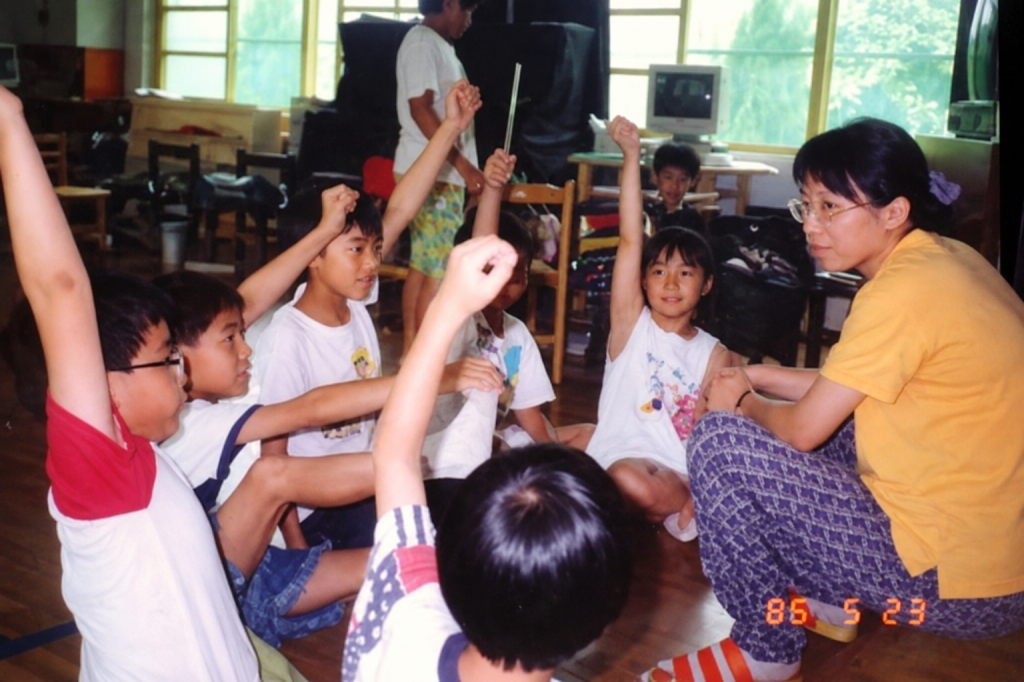
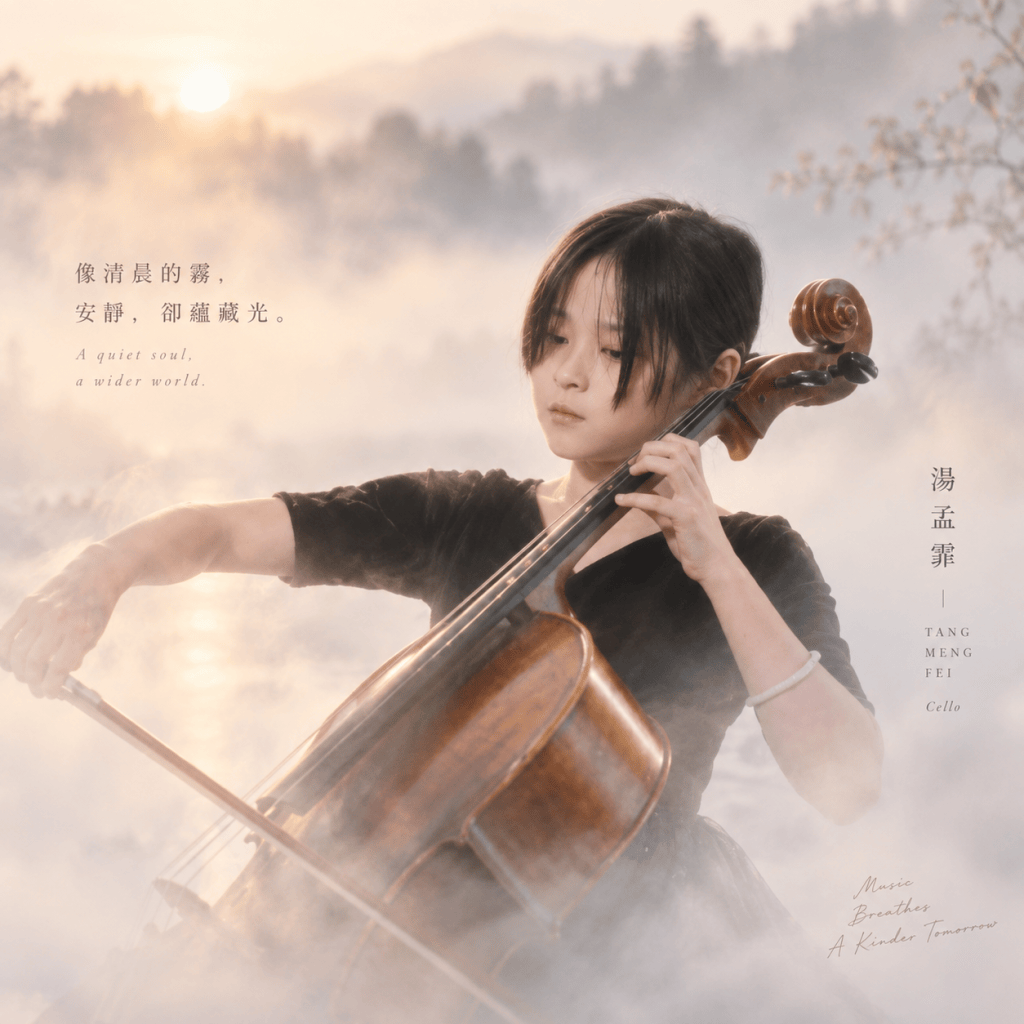
• 文/孫德珍

    小女孩以前上大提琴個別課時,我幾次正巧經過。印象中她很不愛練琴,常讓指導老師感到無奈。那時我心裡總有個念頭:或許我可以陪她練練看,說不定能調校她的心態。

    這學期她來到私塾,一來就愛上了這裡。因為抗拒大提琴,她主動要求上我的鋼琴課。我沒有拒絕,因為我知道,這是接近她內心世界的絕佳機會。

    此後,小女孩每天一寫完功課就會黏著我上鋼琴課。她展現出超乎想像的認真,與過往判若兩人。個性原本衝動急躁的她,在我的糾正下,開始練習溫柔地說話;面對自己「闖下的禍」,也能誠懇地修正並用行動彌補。

    有一天,我發現她對大提琴依舊是「從來不練」。我便告訴她:「我可以陪妳練大提琴,但前提是妳得先把大提琴練好,還有空餘的時間,才能練鋼琴。」在徵得家長同意後,大提琴被送到了私塾。為了保住「鋼琴徒兒」的身份,她答應了這個約定。

    剛開始,光是要她拉空弦,每拉幾弓她就喊累。我也不逼她,讓她休息一下,一次又一次地耐心等待她重新拿起琴弓。雖然每次練習的時間不長,但只要賺到了「音樂家代幣」,她就會興高采烈地去登記。

    漸漸地,她的內在動力被點燃了。她開始主動要求加入「數學浸潤」,玩完遊戲便拿起學習單一口氣寫完,遇到不會的非要問到懂為止,每天都不願錯過我給予的引導。

    有一天我對她說:「我想陪妳好好的修改一下研究報告,好不好?」她欣然答應。但因為週末她不在竹北,爸媽為了配合,特地提早把她送回私塾,好讓我為她「調調弦」。

    那天下午,她竟然是有備而來,面對我提出的研究問題都能迅速回應。身為小學二年級的孩子,她還有很多字不會認,卻依然勇敢地讀出來,哪怕讀錯了也大方讓我糾正,這份無懼讓我的內心無比動容。我們花了很長的時間,將畢卡索的作品徹底看熟,分析出不同時期的創作特徵,也研究了畢卡索各個時期的自畫像,去驗證不同年齡的容貌是否反映了不同的藝術風格。每完成一頁,我便讓她把文字讀順,她有時會建議我:「老師,這裡用哪個詞我比較好讀?」我也樂意接受她的「指導」,讓她教我怎麼教她;有時我也會建議她使用旁人更容易理解的詞彙,她也都欣然採納。

    到了研究課那天,她充滿自信地上台發表,帶領大家真正認識了畢卡索。下課後,她立刻向我預約:「等一下可以陪我練大提琴嗎?」我請她先去準備,她動作飛快。

    這幾天下來,她終於把先前「絕不練習」的巴哈小步舞曲,一弓一弓地拉了出來。她甚至能獨自待在琴房裡,對著平板電腦,一音一音地摸索出音高,一弓一弓地校對弓法,再一句一句地將曲子串聯起來。

    我問她:「老師有指派新曲子嗎?」她回答有,但其中一首《獵人》太難了,她不會。我溫柔地說:「那就一步一步來。」我們從撥弦開始,一個音一個音撥,接著一句一句撥,最後挑戰一整段。速度跟不上,我們就放慢,直到有十足的把握。

    那一天晚上,整整三十分鐘的練習裡,她沒有抱怨一次手酸,也沒有嫌棄曲子太難。最後,她竟然將整首原先自認「完全不會」的曲子,順利找到了所有的音。

    「陽光、空氣、水」是生命存活的三大要素。而一個優質生命的開展,同樣需要三個條件:

    • 溫暖的陽光:讓孩子看見生命的舞台,傲然跨出陰影。
    • 流通的空氣:幫助孩子擺脫淤泥般的環境,心靈得以自由呼吸。
    • 活水的浸潤:引導孩子在學習中找到方法,結出屬於自己的強勢領域。

    親愛的小女孩,陪妳走的這段日子,妳也為我的生命帶來了豐富的營養。這朵盛開的花朵讓我想到了妳。祝福妳!老師愛妳!

    【巴拿巴隨筆】從「不受控制」到「自我管理」——私塾裡的生命交響詩

    接連讀完這兩篇關於同一個山泉班小女孩的紀錄,心中湧動著一種難以言喻的激盪。在德珍老師的筆下,我們見證了一個被貼上「完全不受控制」、「不愛練琴」標籤的孩子,如何在短短一個學期內,蛻變成上台自信發表畢卡索研究、在琴房耐住性子一弓一音校對巴哈曲子的「小音樂家」。

    這不是魔法,這是雅歌教育哲學所創造的生命奇蹟。而這個奇蹟的誕生,為我們揭示了三個核心的教育啟發:

    一、 鬆開對錯的糾葛,建立神聖的「自主架構」

    在《光明角》的故事中,師生的衝突點往往在於「爭辯對錯」。一般的教育常流於裁判的角色,試圖分出是非,卻往往激起孩子更強烈的自我防衛。德珍老師的智慧在於「不去判斷誰對誰錯」,而是將焦點轉移到彼此的情感連結上——「老師需要靜一靜」。

    更巧妙的是「光明角」的設立。那不只是一個空間,而是一個「神聖的儀式感」。它給了失控的孩子一個安全著陸的碼頭。當小女孩自願走進去,她不是在接受「處罰」,而是在實踐「自我管理」。奇蹟的點火處,就在於老師信任孩子擁有自我覺察的能力,而孩子因著對老師的愛,願意彎下腰來戰勝舊思維。

    二、 以「鋼琴」為橋樑,教孩子「如何教他」

    到了《陽光、空氣、水》,我們看到了雅歌「因材施教」的極致實踐。面對不愛大提琴的孩子,老師沒有強行說教,而是以孩子喜歡的「鋼琴」為餌,順應她的渴望,建立起師生的信任紐帶。

    最動人的一幕發生在修改研究報告的下午。小二的孩子勇敢地讀錯、讓老師糾正,甚至反過來給老師建議:「用哪個詞我比較會讀。」這就是雅歌提倡的師生共創——孩子在教老師「怎麼教自己」。當教育不再是單向的灌輸,而是雙向的微調,孩子的自信心與自主學習的「強勢領域」就會像活水一樣源源不絕地湧現。

    三、 陽光、空氣、水:教育工作者的自我修煉

    德珍老師在文末提出的生命三要素,精準地破解了教育奇蹟的密碼:

    • 陽光(舞台):老師給了小女孩上台發表畢卡索的舞台,讓她看見自己的光芒,跨出「不會、不愛」的陰影。
    • 空氣(自由):在私塾裡,孩子有空間喊累、有空間休息,心靈在不被壓迫的環境中自由呼吸。
    • 活水(方法):面對極難的曲子《獵人》,老師不用高壓催促,而是「一步一步來」,從撥弦到分段,放慢速度,給予具體的方法浸潤。

    最令人動容的是,德珍老師在隨筆的最後寫道:「妳也帶給我許多營養。」在雅歌的教育現場,師生不是施予者與接受者的關係,而是兩顆靈魂的相互滋養。

    給所有未來讀者的啟發是:沒有真正「不受控制」的孩子,只有尚未被愛與方法喚醒的生命。當我們願意如大師般耐心地等待,在光的角落裡給予溫暖,在活水裡給予方法,每一個受挫的生命,都能在時間的淬鍊下,綻放出屬於自己最美麗的花朵。

  • 文/孫德珍 2011

    雅歌的課程有三個向度:知識、技能與品格。知識的浸潤圍繞著三年一輪的人文主軸展開;品格的喚醒,是將課堂所學轉化為對人生的啟示;而技能的建立,則是透過研究課,學習「如何學習」。

    剛開始做研究的人,往往有一種心態,對蒐集來的資料視若珍寶,總覺得報告愈長愈好。然而,雅歌的研究課從資料蒐集開始,在建立架構後,就必須學會割捨無關的「資料」(data),提煉出有用的「資訊」(information)。研究,本就是處理資訊的過程,這也是為什麼雅歌人常常探討處理資訊的六大技巧。

    在撰寫研究報告時,最難的是刪繁就簡、讓重點浮現,這也是我最在意的部分。研究架構的建立影響著整個過程;在架構清晰以前,所有的心血都是鬆垮的,甚至常是白費工夫。可惜很多新手遇到瓶頸時,不知道問題出在架構,只誤以為自己詞窮。

    過去曾有幾位朋友請我協助修改論文,當我好心告訴他們必須從架構大改時,得到的反應往往是:「不行!只能改內容,改到可以通過的程度就好。」後來,經過漫長的時日,他們發現怎麼改都徒勞無功,才又回頭找我,願意嘗試我的方法——忘掉過去完成的篇章,從架構重頭來過。結果,反而很快就完成了。欲速則不達,基礎絕不能偏廢。

    喜恩是個新進的大孩子,對自己期許很高,卻常因達不到目標而心生沮喪,學習之路走得充滿挫折。這陣子看他埋頭做研究,卻一直沒拿給老師看,我禁不住好奇他進行得如何。當他把報告拿來,我問他需不需要幫忙修改,他答應了。

    我看見他已經在製作簡報,裡面雖充斥著從網路擷取的資料,卻缺乏條理。我告訴他必須調整,得從架構內容改起,而且他需要跨入閱讀。他聽了十分挫折,覺得自己花了那麼多時間好不容易做完,為什麼還要改?更核心的原因是,研究並非他的興趣,他不想在此花費心思。

    當我告訴他,研究不是找出問題、再把答案貼上去就好,他坦言自己從未學過。我問他:「那你想不想學?」我知道他缺乏經驗,需要時間引導,因此提出願意利用週末陪他徹底學會、共同完成。這讓他更加挫折(為什麼雅歌的研究課不能有做就好?),也陷入猶豫(看得出他不想對我不敬,卻也不想勉強自己)。我的熱心在當下沒有得到共鳴,心裡不免也有些挫敗,但我願意給他時間,靜靜等待他自己生出渴望。

    週一上課時,喜恩竟然主動來找我,對我說:他想通了,願意接受我的指導。這話讓我深受感動,因為我知道,在剛剛過去的週末裡,他在內心的天人交戰中,戰勝了自己的舊思維。

    我們很快地將研究題目重新架構,他甚至展現了徹底重來的決心。我陪著他找資料、在網路上訂書,還請彥塵從清大圖書館借來一本簡體字的專業書。這一次,他非常認真投入。這是我第一次在喜恩身上看見「虛心」的品格,內心無比動容。

    喜恩研究的主題是名琴的故鄉——克里蒙納(Cremona),探討手工小提琴的製作。這次的歐洲之行,我特地安排了這個行程,好讓他腳踏實地去驗證所學。在那裡,他親眼見到許多傳世名琴,也看到工藝大師如何傾注心力,將一片片木板細細地雕、刻、磨、漆。原來,唯有百年代代相傳的製琴家族,才能養出百年的木料,直到大師慧眼識得其價值,方才投入創作。在漫長的歲月裡,木頭虛心吸收日月精華,又在大師手中經歷反覆的微調與修剪,直到毫無瑕疵,最終才獲得一個榮耀的身分:手工琴。

    我問喜恩:「成為一把名琴,需要哪兩個條件?」 他回答:「一個是要接受大師的雕刻與調整。」 另一個條件,我接著告訴他:「是必須願意花時間。所有絕美的藝術,都需要時間的淬鍊。」

    那一刻,他動容了。那一晚,我看見他終於抖落了心靈的塵埃,脫去了過去的積習。以往的他,因理想過高而無法彎下腰來,看不見自己的問題,只能在「高期望、低成就」的現實中對自己不滿、充滿挫折,正如竹籃打水,到頭來一場空。而現在,他看見了自己生命的破口,願意將自己交託出來,讓我雕刻,也開始願意給予時間。

    我看見他學會了珍惜——對我,也對他自己。這趟歐洲行,無疑是他生命的轉捩點。他願意付出時間,而我也深感榮幸,能成為他的「大師」,開始對這塊珍貴的木料,進行生命的雕刻。

    【巴拿巴隨筆】在生命破口處,聆聽手工琴的初啼

    讀完德珍老師的這篇紀錄,文字雖如流水般溫潤,內裡卻藏著教育最驚心動魄、也最美麗的奇蹟。

    許多人常問,雅歌的教育理念究竟如何落地?師生之間那些令人動容的「生命奇蹟」又是怎麼發生的?答案其實就藏在研究課的「割捨」與「架構」,以及克里蒙納「名琴」的隱喻裡。

    一、 奇蹟的起點:從知識的處理,到品格的對焦

    雅歌課程的獨特之處,在於將「技能」與「品格」鎔鑄於一爐。正如德珍老師所指出的,研究不只是拼湊資料,更是「刪去枝節,讓重點浮現」的過程。 這不只是做學問的功夫,更是生命的隱喻。孩子在成長過程中,往往像初做研究的新手,喜歡抓取大量外在的、網路上的浮華資訊(高期望),卻缺乏一個核心的「架構」來安放自我,因而迷失在「低成就」的挫折中。雅歌的研究課,是透過嚴謹的思考訓練,逼著孩子去面對混亂,學習割捨。奇蹟不是憑空降臨的,它建立在「基礎不能偏廢」的扎實鍛鍊之上。

    二、 奇蹟的推手:大師的「等待」與「陪伴」

    在喜恩的故事中,最關鍵的轉折發生在那個風起雲湧的週末。面對孩子的抗拒與退縮,德珍老師固然感到挫折,但她選擇了「等待,等他自己要!」 這需要何等巨大的教育心量。一般的教育往往流於權威的強迫,或是妥協式的「有做就好」;但雅歌的師生互動,是「大師與木料」的對話。大師看見了木料的價值,因此不忍遷就、不願敷衍。老師用周末相陪的承諾給予安全感,同時用不妥協的標準劃出界線。這種毫無保留的愛與堅持,才給了孩子跨越舊思維、展現「虛心」的勇氣。喜恩的週一主動求教,正是生命被愛喚醒後的自主選擇。

    三、 給未來讀者的啟發:絕美的藝術,需要時間與修剪

    克里蒙納的手工琴,為雅歌的師生互動做了最完美的註腳。一把名琴的誕生,離不開兩個條件:大師的雕刻時間的淬鍊

    這給予所有教育工作者與家長深刻的啟發:

    • 看見破口,才是雕刻的開始:孩子的不滿、挫折與抗拒,往往是生命最真實的破口。當孩子像喜恩一樣,願意彎下腰來、坦承自己的不足,將自己交託給引路人時,教育的奇蹟便已發生。
    • 耐得住時間的養分:現代教育往往追求速成,然而生命的蛻變「欲速則不達」。百年的木頭需要時間吸收日月精華,大師的雕刻需要時間一刀刀修剪磨漆。教育,是一門陪伴孩子「熬過天人交戰」的藝術。

    喜恩的歐洲行是他生命的轉捩點。他抖落了塵埃,學會了珍惜。而這篇隨筆想告訴每位讀者:在雅歌,每一個孩子都是一塊獨一無二的百年木料,只要我們願意成為那對準靈魂深處、嚴格卻溫柔的「大師」,並耐心地給予時間,生命的破口,終將成為音樂流淌而出的神聖源頭。

  • 文/孫德珍

    序曲:來自教學現場的呼吸

    雅歌的語文採用「全語文」的學習方式。我們深信,語文是孩子在生活中因為需要溝通、表達,才學會使用的工具——有時是中文或母語,有時是英文,而另外一個,則是與大自然對話用的數學。中文、英文、母語甚至數學,都是孩子與世界相遇、對話的語言。

    雅歌復校,堅持原汁原味。這幾段多年前由朱秀雯老師與秀珊老師在現場留下的觀課紀錄極其珍貴,因為它們不是事後關在房間裡整理出的冰冷理論,而是課程現場留下的真實呼吸。兩位老師聽見的是語文課,但真正被喚醒的,卻是「孩子怎樣才學得會」這個教育的根本問題。

    【觀課紀錄一】每個孩子都是主角:顛覆傳統的引導式教學

    紀錄人:朱秀雯老師 (98/11/17)

    今天聽孫老師講述課程規畫的原則與方向,包含「發現學習」、「任務導向的課程設計」、「以終為始的活動設計」,以及「以浸潤方式的故事學習」,覺得獲益良多。

    過去在師資班時,我們也都學過各種教學方法,但時日一久,為了符合一般學校大班級的教學步調,最後往往流於以老師為中心的「講述式教學法」。在這種體制下,部分跟不上學習步調的孩子,往往無奈地被拋在後面。今天聽完孫老師論述的教學方式與技巧,我想我能深刻體會與認同,這也再次提醒了我:活動設計應以孩子為導向,提供孩子更多思考與發現的機會。

    在雅歌教學已近三週,我發現到這裡的每個孩子都是主角!在小班級裡每個人都有機會表現,任何不同的聲音也都能被聽見。不難看出,這裡的孩子是有自信的、有聲音的,更是幸福的。

    由於秉持「多元智能」理念,雅歌的學習顯得格外多元與活潑,所學的知識能真正應用在生活中。我深刻體悟到,老師的角色在於「啟發與引導」,而不是直接灌輸教學,這徹底顛覆了我過去幾年的教學習慣。在未來的教學活動設計上,我將更加審慎思考其功能性,並以多元智能為方針,讓每一個孩子都有獲得成功的機會。

    【觀課紀錄二】高山仰止的解碼藝術:用任務打破教學鑽牛角尖

    紀錄人:秀珊老師(美的分享)

    好久沒有上孫老師的課,今天有機會跟秀雯一起聽老師講解英語教學的原則,果然是「高山仰止」,但「心嚮往之」。老師講的活動設計三原則以及技巧,我明明背得很熟,可是在實際著手設計時卻常常捉襟見肘。今天老師提到以 project approach(專題式教學)、以「任務」為課程設計的目標導向時,舉了幾個學習任務的例子,過去卡住的問題似乎瞬間明朗化了。

    回想過去的師資培訓,我發現自己還是容易斷章取義,無法融會貫通。譬如:如何讓孩子在學習語文的時候,一邊以音樂智能輔助學習,一邊又要能提早寫作?因此,我常在「教孩子認識字母」與「聽懂英文」之間鑽牛角尖,把自己和孩子都繞暈了。

    孫老師今天示範了一個極具智慧的任務:「讓孩子先從短文中找出認識的單字並圈出來;接下來,讀過一遍之後,再找出可能認得的單字。」

    類似這樣的任務設計,極其簡單地就將「認識單字」與「孩子耳朵接收到的語言」加以解碼結合起來。看著耳邊聽到的音與眼睛看到的符號在任務中慢慢相認,我坐在一旁,除了嘆為觀止,沒有別的話說。

    如同我們在每堂課裡只要求孩子學會一件事情、但是要深刻地學會一樣,孫老師也溫柔地叮嚀我和秀雯:不要急著把所有的教學技巧一股腦學會。今天學會用「project approach」,就深刻地將它學會並運用。我想,如果能把老師今天教給我們的撇步都融會貫通,孩子們上起課來,一定堂堂課眼睛都亮晶晶!

    貓頭鷹媽媽的話:先有整體,再解碼局部

    有一件事,徹底啟發了我對語文教學的根本認識,那是源自於我對兒子安筑幼年時期學習方式的觀察。當時,一位幼教博士對於安筑的語文學習驚人的成效相當好奇,在心細地長期觀察後,她發現安筑具備一種極強的「解碼系統」——他能夠透過生活情境全盤掌握「整體」,再將局部與全部進行對照,進而自然得到局部細節的涵義。

    我的博士論文研究的是幼兒創作。當時我開發了一個電腦軟體,目的就是讓還不懂文字的幼兒,能夠有一個數位工具去記錄他們腦海中的創作。我大膽打破了傳統教育「先讀再寫」的固有順序,讓兒子嘗試「先寫再讀」。當孩子心中有話想說、有東西需要記錄,他的「動機」便會瞬間提升專注力;而這樣寫出來的東西,孩子自己最能讀懂,也最有感覺。雅歌的「美的分享」教材,就是在這樣的思維下孕育產生的。

    活動設計有三個鐵律原則:重複性、連貫性、邏輯性。

    可惜的是,許多老師把「重複性」用得不好,只停留在單一智能的死記硬背,最後變成了機械化的枯燥操練。雅歌講多元智能,我們的「重複性」是建立在「使用不同智能去探索同一個核心」。我們的目標是讓孩子的整個人都浸潤在其中,因此,浸潤式的學習必須是生活化、自然化、人性化與社會化的。

    這正是「先寫再讀」的根。當寫作不再是應付老師的作業,而是生命表達的需要,語文便不再是單字、字母、文法的零碎切割。

    雅歌的語文浸潤,核心不是教孩子死背更多字,而是讓孩子成為一個「能解碼的人」。孩子先在生活中感受整體,再從整體中辨認局部,最後把局部放回意義之中。語文因此不只是讀寫能力,而是孩子與世界相遇時,心中慢慢亮起的一盞燈。

    巴拿巴隨筆:給教學一雙「解碼」的眼睛

    讀著兩位英文老師在 2009 年留下的觀課紀錄,像是拉開了一扇時光之窗,讓我們看見雅歌語文浸潤課堂裡最珍貴的底層邏輯。

    坐在台下的觀察者如我,被這份紀錄深深打動,主要在於以下三個關於教育的「破局思考」:

    1. 打破「先讀再寫」的慣性,看見生命的「動機」

    傳統語文教學像是搬磚頭,要求孩子先認字母、背單字、學文法(先讀),最後才能拼湊出一篇文章(後寫)。但孫老師卻敏銳地顛覆了這個順序,提出「先寫再讀」。這背後是對人性極深的理解:當孩子心中有源源不絕的創造力想記錄時,寫作是「生命的需要」。他自己用符號拼湊出來的世界,自己最懂,也最有感覺。這種由內而外的動機,遠比被迫死背字母強大百倍。

    2. 拒絕「機械式重複」,用多元智能進行「感官浸潤」

    許多老師常把活動設計的「重複性」誤用為機械式的抄寫或朗讀,把孩子變成了複讀機。但秀雯與秀珊老師的紀錄點出了雅歌的精髓:雅歌的重複,是「用不同的智能一次又一次靠近同一個意義」。這堂課用音樂智能去聽音,下堂課用視覺去圈字,再下堂課用專題任務(project approach)去實踐。目標不變,但路徑天天新鮮,孩子整個人浸潤在全語文的情境裡,眼睛自然堂堂亮晶晶。

    3. 「先整體,後局部」的森林哲學

    秀珊老師提到的那個「嘆為觀止」的撇步:在短文中先圈出認識的字,再讀一遍找出可能認得的字。這就是「先看見森林,再辨識樹木」的解碼藝術。孩子不需要在單音和英文字母間鑽牛角尖,他們先透過耳朵聽故事、透過眼睛看整體情境,建立起「安全感與關連感」,接著才像偵探一樣去局部解碼。這不是在訓練認字機器,而是在培育一個具備宏觀思維、能與世界對話的解碼者。

    這篇珍貴的紀錄提醒了所有教育者:語文課的核心,從來不是老師塞了多少單字,而是我們有沒有在教室裡,把孩子放回「主角」的位置,給他們一雙能夠解碼世界的眼睛。

  • 文/巴拿巴

    在許多人的印象中,數學是冷冰冰的算式、是枯燥的加減乘除,甚至常常成為孩子學習路上的挫折來源。然而在雅歌,數學是一場充滿驚奇的感官壯遊。我們透過「浸潤式」的情境設計,開啟幼兒的解碼系統,讓尚未入學的孩子,也能在遊戲與生活中,自然地建立起深刻的數學思維。

    這套非典型的幼兒數學教育,是由六個溫柔而堅定的核心實踐所編織而成:

    一、 透過柴米油鹽,翻譯數學語言,讓學習模擬人生

    數學不該只存在於課本裡,它就藏在日常的煙火氣息中。我們帶領孩子走進廚房、走向菜園,在量度調味料的克數、分配食材的份量、計算種子的間距中,將抽象的數學符號翻譯成生活中的「柴米油鹽」。當數學與真實生活產生連結,學習就成了一場豐富的人生模擬,孩子學到的不只是數字,更是解決生活問題的能力。

    二、 透過音樂架構,喚醒數學思維,讓抽象變為具體

    身為音樂教育家,我深知音樂與數學在底層邏輯上的完美共鳴。音符的長短、節奏的律動、樂句的結構,本質上都是最嚴謹的數學模式。在課堂上,我們透過音樂的架構與身體的律動,讓孩子聽見長短、拍出規律。音樂喚醒了孩子指尖與耳畔的數學思維,讓看不見、摸不著的抽象概念,化為耳邊具體的旋律與身體的擺動。

    三、 透過視覺媒材,呈現數學模式,讓算式一眼看穿

    幼兒的認知發展是由具體走向抽象的。為了讓孩子不害怕算式,我們善用豐富的視覺媒材與情境營造。透過顏色、形狀與空間的排列,將複雜的數學模式視覺化。當孩子看著教具與圖像時,邏輯的軌跡便一目了然——不需要繁瑣的死記硬背,孩子用眼睛就能「看穿」算式背後的秘密,建立起直覺式的數學眼光。

    四、 透過動覺操作,驗證數學定理,讓理論振奮人心

    「聽過會忘記,看過會記得,只有做過才會真正理解。」雅歌的數學課充滿了動覺操作。我們挑戰讓幼兒接觸一般人以為太早、太難的雞兔同籠、甚至是開根號。我們不給標準答案,而是讓孩子用雙手去搬動教具、去拼湊、去實驗。當孩子透過自己的雙手親自驗證了數學定理的那一刻,那份「我想通了!」的驚奇與成就感,會化作振奮人心的力量,點燃他們對知識的終身渴望。

    五、 透過同儕合作,混齡螺旋設計,讓概念完成拼圖

    雅歌堅持大混齡班的教學模式,在數學浸潤中更是如此。我們採用螺旋式的課程設計,同一個數學概念在不同年齡層有著不同的深度。透過同儕之間的合作,年長的孩子在引導年幼孩子的過程中深化了自己的邏輯,年幼的孩子則在觀察哥哥姊姊的操作中獲得啟發。在這樣充滿互助的氛圍裡,孩子們彼此交流、互相補位,最終讓每個人心中的數學概念完成了最完美的拼圖。

    六、 透過活動設計,兼具挑戰可行,給把梯子去摘星

    辦教育,需要精準拿捏「鷹架」的藝術。我們的活動設計永遠在挑戰教育的極限,看似高遠,卻充滿可行性。我們從不因為孩子年紀小而限制他們的潛能,相反地,我們深信每個孩子都具備超乎想像的理解力。我們要做的,不是把星星摘下來餵給他,而是用多元智能與品格教育,為他搭起一座穩固的鷹架——給他一把梯子,讓他拍拍翅膀,親自去摘下屬於自己的繁星。

    在雅歌,數學浸潤是一場溫柔的啟蒙。我們用生命的溫度包裹著理性的邏輯,讓孩子在愛的浸潤中,長出自信、長出智慧,最終活出屬於自己最美麗的本色。

  • 文/巴拿巴

    序曲:從兩隻布偶到百首兒歌的誕生

    誰能想到,一齣震撼台灣教育界、被譽為「文化奇蹟」的兒童歌劇,最初的起點,竟然只是兩隻小小的布偶。

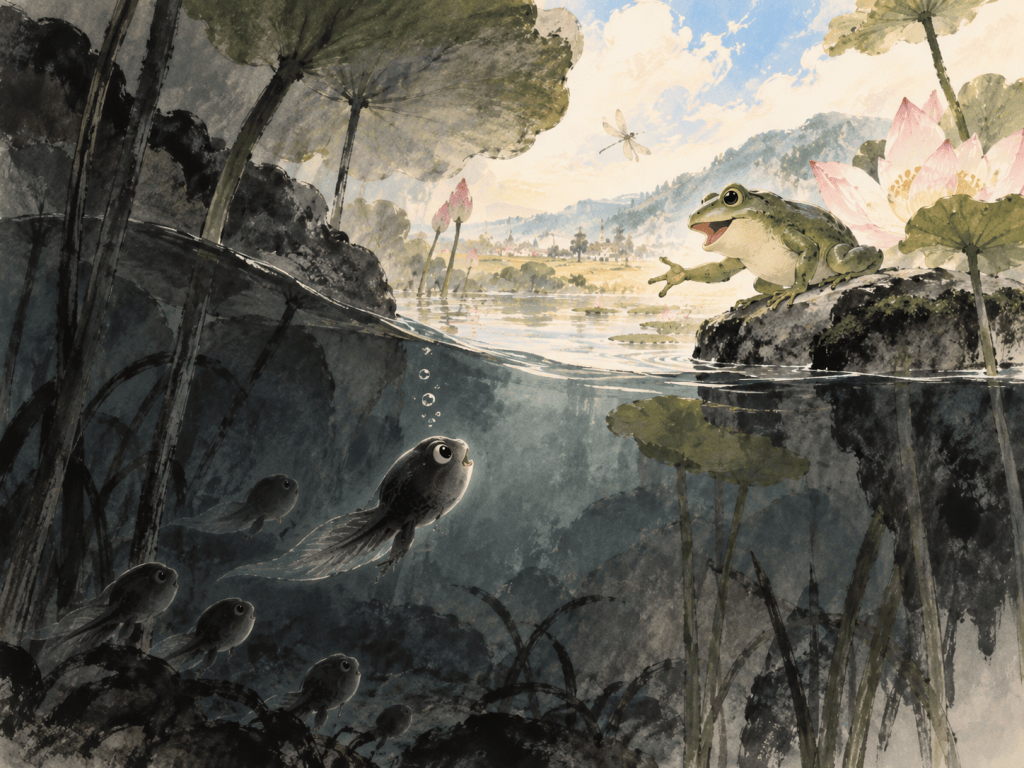
    那是 1982 年的美國愛荷華大學,在音樂研究所團契的一場音樂佈道會上。我手裡拿著兩隻布偶——一隻是名叫「大寶」的蝌蚪,另一隻是名叫「福樂」的青蛙。在不同的演出節目間,大寶與福樂用稚嫩卻深刻的對話穿場,向台下的觀眾訴說著生命蛻變的奇妙。那時,小池王國的種子已在悄悄萌芽。

    返國後,因緣際會進入教師研習會,我有機會為台灣教育廳編寫幼兒教材,當時一口氣熱情地寫了一百首兒歌。為了向幼教老師們示範如何在幼稚園裡實踐音樂劇,我將當年的布偶對話擴充,寫成了音樂劇《小池王國的故事》。在中原大學附幼與中原新村小學生的演繹下,這齣劇首次登上了中原大學音樂廳的舞台,開始吸引了教育界的目光。首演過後,我再度揮別台灣,赴美進修。

    淬鍊:從幼兒歌劇到「無懈可擊」的獲獎劇本

    1994年,我任教於新竹師院。進修部的學生們在課堂上以幼兒劇的方式再度排演此劇,體會如何透過音樂彰顯戏剧的張力,這是《小池王國》的二演。隔年,這齣劇正式成為竹師附小幼稚園實驗課程的教材。畢業季時,由附小幼稚園的稚嫩幼童,與新竹師院音樂系四年級的大學生共同攜手,在新竹市立文化中心完成了震撼的「三演」——此時的《小池王國》,已經蛻變為一齣結構完整的幼兒歌劇。

    1995年,命運給了《小池王國》一個極高的榮譽,也留下了一個耐人尋味的遺憾。那一年,劇本榮獲論壇報舞台劇本獎。評審張曉風女士特地撰文推薦,由衷讚譽:

    「小池王國是齣成功的寓言劇,它包含寓言文學裡恣縱自如的想像力,以及活潑多重的象喻,宜於給成熟的孩子或童心猶存的大人觀看。」

    然而,評審也坦言,在評分時《小池王國》其實獲得了最高分。但因為大賽規定第一名的作品必須具備「可執行性」,評審團一致認為這齣歌劇的製作與演出難度實在太高,擔心一般專業劇團也難以驾馭,才百般糾結地將它改列為第二名。

    奇蹟:在歷史與風雨中綻放的雅歌經典

    專業劇團都視為畏途的高難度歌劇,卻在雅歌的教育現場,被孩子們一次次演活了。

    當新竹縣長范振宗指派山湖分校進行我的教育實驗計畫時,我便以《小池王國》作為「交融性課程」的示範設計。1996年,全校僅有的66名學生全員上陣,在新竹縣立文化中心登台。布幕拉開後,這群孩子在長達45分鐘的演出中專注投入、發光發熱。台下湧入的滿座人潮——上至白髮蒼蒼的老人,下至抱在懷裡的幼童,全程屏息觀賞,毫無冷場。那幕令人動容的演出,讓劇評家夏學理教授驚嘆道:「台灣的文化奇蹟在新竹!」這便是傳奇的四演。

    隨著雅歌正式創校,《小池王國》被列為學校三年一輪課程主題的至高經典。1999年,蔡仁堅市長邀請雅歌遷校新竹市,雅歌師生在交通大學中正堂迎來了五演。當時雅歌備受媒體關注,網路上甚至掀起了一票難求的狂潮,兩千席次的中正堂竟然失控發出了四千張票。演出當天,瑪姬颱風狂風暴雨肆虐台灣,雖然部分觀眾受阻,但現場依舊被擠得水洩不通,連走道都坐滿了觀眾,轟動全台。

    2000年,遷校新竹市的計畫受挫,雅歌播遷至峨眉,並被教育部選為九年一貫藝術與人文示範學校。2002年,《小池王國》在縣立文化中心迎來六演。因為三年才等得一場,許多人早早便開始索票,演出當天甚至造成了周邊的交通管制。

    然而,掌聲背後是無盡的磨損。2002年夏,大坪國小改為公辦民營,我卻未能編入體制,最終身心俱疲、因病赴美修養。2005年的第七演,是由堅強的家長們自發主持,帶著大坪國小全校學生在文化中心再度重現。那是一場沒有孫老師在現場、卻依然傳承了雅歌精神的演出。

    靈魂:不挑選菁英的交響統整

    兒童歌劇的製作難度之所以高,是因為雅歌從不挑選菁英,也從不進行高壓的密集操練。我們僅僅是配合每週一堂的歌劇課,將語文、音樂、肢體、甚至是舞台設計等各科所學,做一個最自然的「交融性統整」,讓孩子在台上自然地做自己。

    在編寫之初,我便精密地考慮了兒童的能力與劇場的管理。整齣戲是用音樂的架構在嚴謹推進,孩子不需要死記硬背,他們只要聽著音樂的發展,就能自然了解該有的動作與對白的進行。縝密的配樂完美地襯托著劇情,當戲裡的交響曲與劇情貼切配合時,孩子們在不知不覺中對古典樂建立了深厚的情感——他們甚至天真地以為,這些無懈可擊的配樂,是貝多芬、莫札特、舒伯特特地為《小池王國》所創作的。這齣歌劇,成為了所有雅歌校友一生都難以遺忘的靈魂記憶。

    尾聲:在三峰,讓藍色經濟再度活化生命

    在這個許多人只讓孩子不斷進行即興創作的時代,雅歌始終堅持:孩子的生命中,一定要有經典的浸潤。然而,這樣高難度的製作需要極高的專業。隨著雅歌的熄燈,《小池王國》在時光中消失了整整十年。加上我起伏的健康狀況,我曾無數次悲傷地考慮,是不是該將這齣劇永遠地封箱?

    直到今年,在三峰,我們又迎來了《小池王國》的季節。

    這裡是一個幾乎被世界遺忘的偏鄉學校,這裡有一群極需被看見的弱勢孩子,這裡還有一個被遺忘的教育家。沒有龐大的資源,沒有頂尖的團隊,我們究竟要如何在這裡,再度重現那段絕代風華的兒童歌劇?

    我想起我的好友雅卿,在我最困難、最絕望的時候曾溫柔地安慰我:「我們都是從零開始。」

    在《小池王國》的故事裡,小池塘裡的蝌蚪們不知道上面還有一個美麗、寬廣的陸地世界,甚至固執地拒絕相信。這一次,在三峰,我抱持著微小卻堅定的希望——我希望透過《小池王國》的排演,讓這群孩子看見未曾想像過的高空,讓三峰走出被廢校的命運;更希望藍色經濟的永續精神,能在這裡活化這個校園裡的每一個生命。

    包括傷痕累累、卻從未放棄的我自己。

  • 文/巴拿巴

    築夢起點:從府城、台北到偏鄉的教育初心

    孫德珍,出生於台南,成長於台北,後遠赴美國留學取得博士學位。學成之後,她選擇新竹作為孩子的第二故鄉,並在此展開她深刻而漫長的教育實踐。

    回首起點,孫德珍出生於清貧家庭,從小嚮往讀書。高中時,她雖考取了指標性的北一女中,卻毅然選擇進入女師專。當時的她,對教師這一職分其實相當排斥;然而,生命在遇見奧福教學大師蘇恩世神父後產生了轉折,她的心態逐漸被轉化,自此立志成為一位好老師。

    師專畢業後,她主動選擇到一所偏鄉小學任教,甚至吸引了十位同學相隨。初為人師,她便展露出對教育改革的澎湃熱忱,帶領孩子們活出最天真、最可愛的生命樣貌。

    轉身奉獻:離開音樂殿堂,走向教育現場

    她是一位卓越的音樂指揮家,曾創辦合唱團與管弦樂團,獲獎無數,更曾擔任大學音樂系主任;然而,為了全身心投入教育改革,她毅然辭去大學教職,告別了掌聲不絕的表演舞台。

    她也是一位敏銳的音樂教練,總能精準看出學生的瓶頸,用獨特的方法引導學生突飛猛進,栽培出無數優秀的徒弟。只是,她從未想過靠這份過人的能力為自己累積財富,而是選擇將所有的生命與時間,無私地投進基層教育現場。

    作為音樂教育家,她以十八年的歲月默默醞釀,淬鍊出一套音樂教材《音樂的生活・美的分享》。這套教材採用中華文化的素材,讓華人孩子快樂學音樂,也讓老師能從容地教學。當時,審查委員陳澄雄教授盛讚其音樂「無懈可擊」,陳藍谷教授讚賞其課程架構的深厚功力,師院教授代表更感動地表示:「等了三十年,終於等到這套書。」

    她同時也是一位充滿靈性的寓言作家。她的兒童歌劇《小池王國》曾榮獲論壇報舞台劇本獎,評審張曉風教授特地撰文推薦,稱其為一齣成功的寓言劇,兼具恣縱自如的想像力與活潑多重的象喻,既適合成熟的孩子,也適合童心猶存的大人。

    雖然未曾受過專業的導演訓練,孫德珍卻巧妙地透過課程設計,將兒童歌劇的演出難度化解於無形。當年劇本參賽時,評審雖給了最高分,卻因擔心作品難度過高、連專業劇團也難以駕馭,而改列第二名。然而,雅歌的孩子們卻跌破眾人眼鏡地把《小池王國》給演活了!那三年一度的公演盛況空前,更被劇評家夏學理譽為:「台灣的文化奇蹟在新竹!」

    跨界實踐:以多元智能打破學科疆界

    身為教育家,她堅持以師徒制培訓老師,用多元智能讓孩子「學得會」,用品格教育讓孩子「願意學」。她不斷精益求精、挑戰自我,甚至親自示範如何教學不同的科目,向老師們活出「學習如何學習」的真義。

    孫德珍的教育之路,從不自我侷限在熟悉的音樂專業裡。為了讓學生真正聽懂,她勇於跨足一個個全然陌生的領域。她雖以音樂為根,但只要哪一個學科成為孩子的理解障礙,她就願意親自進去鑽研、尋找新教法。

    她雖非語文專長,卻大膽挑戰語文教學。她教孩子寫作,不從死板的格式規則下手,而是在第一堂作文課就帶領孩子寫出一場熱鬧的動物選美會;她教高中生閱讀經典,不教他們死背答案,而是傳授如何用透視鏡去比對、辨識與理解。她甚至走進自己原本也感到遙遠的科學領域——曾有老師在觀摩完她講授「光合作用」後,深受震撼地對她說:「如果我以前有這樣的老師,我一定會愛上科學。」這句話之所以動人,正因為她是用一個「外行者如何弄懂」的視角,為孩子搭起理解的橋梁。

    為了驗證「沒有學不會的孩子」,她持續從三個方向挑戰教育的極限:

    • 挑戰最難理解的教材: 她親自教導孩子被公認最難理解的歷史——舊約聖經,並由此發展出《孫校長談品格》課程。
    • 挑戰最不易懂的年齡: 她挑戰教導尚未入學的幼兒,帶領他們神遊《紅樓夢》與《道德經》「上善若水」的意境,甚至讓幼兒輕鬆理解雞兔同籠、開根號等一般人認為太早、太難的數學,進而發展出《品格語法》教材。
    • 挑戰最具潛力的環境: 她創新發展出練琴系統,讓孩子透過電腦學習環境高效練琴,使幼兒在室內樂比賽中驚豔評審。

    她更是幼兒教育的數位先驅,早年便引進電腦學習環境的概念,親自寫電腦程式、發展音樂軟體,讓幼兒也能享受創作音樂的樂趣。她善於營造浸潤式的情境,開啟學生的解碼系統,讓孩子對數學問題一眼看穿,建立起熱愛數學的思維。

    她深信胎教,注重幼教。她曾用「先寫再讀」的獨特方式教孩子英文,創造了驚人的成效。她編寫的教材生動、故事感人,寫下的文章常被四處引用;只是,市面上很難找到她的著作,因為她把所有的精力都給了孩子,沒有時間去為自己出版。

    在課程架構上,雅歌從未脫離國家課程綱要另起爐灶,而是完全依據課綱發展,並在統整與呈現上形成了獨一無二的特色。其中,「藝術與人文」是雅歌最核心的風景,也是交融性課程最重要的示範場域。語文、音樂、數學、社會、自然、品格、體能等學習,都在這個整體架構中彼此呼應。主題課以人文為主軸涵蓋社會科;研究課則透過自然觀察與實驗來承載科學;同時搭配體能課與菜園種菜,讓學習走出課本,落實在身體、環境與生活之中。此外,雅歌更引進雙語的甘特寓言,曾成為藍色經濟示範校園,讓課程不僅連結知識,更連結了永續生態與國際視野。

    逆境堅守:歷經播遷與病慟的雅歌歲月

    然而,這段備受肯定的教育傳奇,卻長期因缺乏合法校地而走得步履維艱。

    2002年,新竹縣政府允許雅歌併入大坪國小進行「公辦民營」試辦。然而,由於當時這類試辦缺乏完善的法律依據,開學之際,雅歌師生雖已完全併入大坪,孫德珍卻未能被納入學校體制編制。她因此失去了實質的主導權,卻仍必須為整個實驗成敗承擔一切責任。

    幾經思量,為了孩子,孫德珍仍選擇在無給、無權的困境下,默默陪伴大坪師生。但不久後,她終因身心俱疲、心臟衰竭而倒下。在醫生嚴厲要求完全退出休養的醫囑下,她於2003年遠赴美國休養,其後僅在假期間返國持續進行師資培訓。

    在美國休養期間,幾位雅歌的孩子因為不捨,特地跟隨她前往美國。孫德珍便在當地成立了「雅歌私塾」,一面陪伴這群孩子學習,一面近距離觀察美國的中學教育。

    2007年,台灣基督書院特別邀請孫德珍返台擔任學務長,為學校建置品格教育。在職期間,她不僅授課,更承擔起全校學生的生活輔導,透過每週週會,逐步將品格教育從人物典範梳理到每週核心品格,建立起一套完整的系統。

    同時,她仍心繫昔日的雅歌孩子。她持續為孩子們開設品格課,深入研究「閱讀解碼系統」。這套教學挑戰了公認最難讀懂的歷史材料——舊約聖經,探索如何讓孩子真正看懂,這份探索後來延伸成了佳音電台《與聖經有約》中的教育節目——《孫校長談品格》。

    當感覺到自己來日無多,孫德珍決定回到新竹,全心籌備讓雅歌復校。然而命運弄人,返台未久,她便被確診為淋巴癌末期。面對噩耗,學生們不捨離去,堅持陪伴老師一起走過這段艱難的抗癌路。

    在苗栗縣政府的支持下,雅歌曾在四季山莊展開復校,這段時期也成為雅歌課程發展最輝煌的里程碑之一。孫德珍在此期間進一步發展出「雅歌數學」,透過閱讀解碼的條件,讓孩子不僅學會數學,更開始喜愛數學;幼兒園也在此時發展出幼兒雙語與經典閱讀課程。此時,甘特寓言不僅以雙語劇本的形式活靈活現地上演,雅歌更正式成為藍色經濟示範學校。

    2011年,奧地利教育界經過一年的觀察與接洽,鄭重邀請孫德珍赴歐協助教育改革,分享雅歌的教育經驗。由於奧地利有十個省分,主辦方希望孫德珍能安排四週以上的時間進行巡迴檢視與指導,並同意讓雅歌的學生同行,以提供大師課作為回報。於是,雅歌師生共同展開了一段國際瞩目的旅歐課程。

    當時,孫德珍帶著國旗在歐洲暢談教改,載譽而歸。然而,國際的掌聲並未能化為本地立案的及時雨。因為堅持不收高昂學費,長年下來,孫德珍始終用自己的積蓄與力量去補足孩子學費的缺口,獨自承受著沉重的債務壓力;與此同時,她的健康狀況也愈發令人擔憂。旅歐返國一年後,2013年,雅歌無奈地吹響了熄燈號。

    生命的交響:讓教育回到生命本身

    雅歌雖然熄燈,但孫德珍的腳步未曾停歇。她持續以「雅歌私塾」的形式陪伴學生,親自帶領大混齡班、教授八年級英文。隨後,她在幼兒園推動雅歌樂團與練琴系統,持續深化品格語法、經典閱讀與閱讀解碼教學,讓孩子們在音樂、朗讀與各類比賽中依然展現出亮眼的生命力。

    她的教育實踐,在不同的場域都激起了深刻的回響。無論是在雅歌的課堂、偏鄉的校園、基督書院的講堂,還是在奧地利與香港的教育交流中,她始終關心的,從來不是如何複製一套冰冷的制度,而是如何讓教育回到生命本身,成為一種可被實踐、可被傳傳的文化。

    對孫德珍而言,學校從不只是傳遞知識的場所,而是一個能讓孩子被看見、被成全、並逐漸活出本色的生命共同體。她所追求的,不是培養出盲目追求成績的學生,而是培育出能理解世界、與人同工、並願意為他人帶來祝福的人。

    她似乎擁有很多隨手可得名利的才華,表現也常令人刮目相看。那麼,她究竟如何看待自己?

    山泉原是天上的雲霧, 她看過雲起時, 也到過水窮處。 為了實現夢想, 她從高處往低處流, 滋潤了別人,也弄髒自己。 她總是在別人的故事裡, 流自己的眼淚。

    上善若水。辦教育,需要的正是這份寬廣的胸懷。

    她的創意原可以換來巨額的財富,她的能力原可以讓自己過上優渥的好日子;但她不要名,也不要利。她唯一的堅持,是在有生之年把一件事徹底做好:讓雅歌復校。

    也因此,當許多人對台灣的教育改革感到迷茫與失望時,她與她的雅歌依然佇立在那裡,成為一個溫柔而堅定的提醒——教育不是沒有可能,台灣,也從來不是沒有希望。

  • 她曾是站在鎂光燈焦點、揮舞指揮棒的音樂家,創辦過樂團與合唱團,得過無數獎牌,甚至高居大學音樂系主任。在世俗眼中,她的才華足以為她換來優渥的名利與好日子。然而,她卻在人生的高峰轉身,辭去教職、離開舞台,將腳步踏進了台灣教育改進的最前線。

    她是孫德珍。一個選擇把新竹當作孩子第二故鄉,並用一生歲月守護台灣教育希望的傳奇女子。

    生命的高度與寬度:跨界的奇才 孫德珍的生命軌跡是一場豐富的跨界壯遊。她出生於台南、成長於台北,在美國完成博士學位。她不僅是音樂指揮,更是精準點出學生瓶頸的「音樂教練」;她曾以兒童歌劇《小池王國》榮獲舞台劇本獎,深受評審張曉風教授推崇。更在前瞻的幼兒教育中,引進電腦學習環境,讓牙牙學語的幼兒也能跨界創作音樂。

    她用十八年的時間,醞釀出一套專屬華人孩子的音樂教材——《音樂的生活、美的分享》,用中華文化的素材,實踐了「孩子快樂學、老師輕鬆教」的教育理想。

    山泉的隱喻:滋潤別人,弄髒自己 有人形容她像一條從高處流向低處的山泉。她看過雲起,到過水窮,卻為了實現理想,甘願告別精緻的殿堂,走入繁雜、辛苦的基礎教育基層。在這條路上,為了培訓老師、守護孩子,她不計代價地付出。正如那句令人動容的寫照:「為了實現夢想,他從高處往低處流,滋潤了別人也弄髒自己。他總是在別人的故事裡,流自己的眼淚。」

    雅歌:台灣教育的希望之光 許多人感嘆台灣教育改革的困境,那是因為他們還沒有看見「雅歌」。孫德珍以師徒制傳承經驗,用多元智能開啟孩子的潛能,用品格教育喚醒學習的渴望。對她而言,名與利皆可拋,她在有生之年唯有一個堅持——讓雅歌復校,讓這個融合了美、品格與智慧的教育園地,成為台灣教育真正的希望。

  • Refined Abstract

    This paper examines Arco Research Class as a high-absorption learning structure in the AI era. Research Class is not an assignment for collecting information and producing reports, but a child’s entrance into the human relay of discovery. Situated within Arco’s three-year rotating thematic web, it served as an integrative center of the interdisciplinary curriculum, connecting inquiry with other subjects through shared themes.

    At its core, Research Class taught children how to learn: to sense time, space, and human community, to identify main points, and to internalize understanding in their own words. Children learned to transform data into information by placing facts, numbers, symbols, and observations within meaningful contexts.

    Cases of pet caregiving research, courtyard house models, historical role-play, tide charts, and multicultural inquiry illustrate how research became a lived process of responsibility, representation, verification, and shared discovery. Teaching others functioned as the final verification: when children could explain what they once did not understand, learning had completed its circle.

    In an era when answers can be generated quickly, Research Class preserves curiosity, patience, perspective, feeling, judgment, verification, and the joy of sharing meaning. This paper argues that research education should not merely help students know more, but help them become people who understand and can continue the relay of discovery through which civilization moves forward.

  • Chapter 1

    From Awakening to Living

    Many children struggle in school not because they lack intelligence, but because they cannot find an entrance into understanding. Others gradually lose motivation because they no longer know why learning matters to their lives. When learning loses meaning, children often seek refuge in virtual worlds, games, or temporary forms of belonging.

    Arco Experimental School was founded in response to these two educational questions:

    • How can children learn to understand?
    • How can children become willing to learn?

    Over years of educational experimentation, Arco gradually developed four interconnected frameworks: MINE, Sim Life, PLUS, and LIVING.

    MINE (Multiple Intelligence Niche Exploration) was developed as an intelligence stage that helps children learn through different entrances. Based on the theory of multiple intelligences, MINE integrates language, music, images, movement, manipulation, roles, and situations into different pathways toward understanding. It allows abstract concepts to become accessible through multiple forms of perception and participation.

    Sim Life was developed as a life stage that helps children become willing to learn. Through simulated professions, missions, relationships, and responsibilities, children enter meaningful situations in which learning becomes connected to identity, dreams, and future possibilities.

    PLUS (Personal Learning Unfolding System) was developed as a supportive decoding environment. Through mixed-age interaction, differentiated participation, flexible structures, peer support, and apprenticeship-style learning, PLUS creates the conditions in which understanding can emerge and grow.

    Finally, Arco sought to develop LIVING — a life community shaped by love, offering, models, and shared responsibility. In this community, learning is no longer limited to academic achievement, but becomes part of how children understand themselves, relate to others, and participate in life.

    Together, these four frameworks form the educational philosophy of Arco:

    • MINE opens entrances into understanding.
    • Sim Life transforms learning into lived experience.
    • PLUS provides the environment that supports decoding.
    • LIVING cultivates a community in which life itself may flourish.

    Within this larger framework, Arco further discovered that many children experience surprising breakthroughs when learning occurs through musical intelligence rather than only through linguistic intelligence. Rhythm, sound, movement, and embodied interaction often allow abstract structures to become tangible and emotionally accessible.

    Through years of classroom exploration, Arco gradually organized a decoding framework called the CHARACTER Decoding System, consisting of nine learning conditions:

    • C — Context:when abstract concepts are grounded in context
    • H — Home:when an apprenticeship environment is present
    • A — Affection:when learners desire to participate
    • R — Read Aloud:when text is interpreted through voice
    • A — Awakening:when learning is driven by questions
    • C — Commitment:when content is refined to its essentials
    • T — Transfer:when problems are represented through media
    • E — Encoding:when answers are verified through structure
    • R — Recognition:when learning is presented before others

    These nine conditions are not a checklist, but a set of interrelated supports that help children enter understanding. Different lessons may activate different conditions; however, when these conditions consistently exist within a learning environment, children gradually develop the ability to decode abstract concepts.

    Chapter 2

    Classroom Examples of the CHARACTER Decoding System

    The previous chapter introduced CHARACTER as Arco’s decoding framework. This chapter presents classroom examples that illustrate how each condition appeared in actual teaching practice.

    These examples are not intended to show that every lesson contained all nine conditions. Rather, each example highlights one condition and demonstrates how Arco designed learning experiences that helped children enter abstract understanding.

    C — Context: When Abstract Concepts Are Grounded in Context

    Tile Shops and the Embodiment of Square Roots

    In teaching square roots, Arco did not begin with mathematical symbols. Instead, children first entered the context of a “tile shop.” Acting as shop owners, they used small square tiles to construct squares and explore the relationship between area and side length.

    Children first described the structure in Chinese:

    “A square with an area of 9 has a side length of 3.”

    They then expressed the same idea in English:

    “The square with an area of 9 has a side length of 3.”

    Only afterward did the teacher introduce the mathematical expression:

    √9 = 3

    At this moment, the teacher introduced “how masters say it,” helping children discover another language: mathematical language.

    Children often reacted with surprise:

    “It’s so short!”
    “So powerful!”

    Mathematical symbols were no longer unfamiliar marks, but a condensed language that captured experience and structure. Thus, Context grounded abstract concepts in meaningful situations before symbolic representation was introduced.

    H — Home: When an Apprenticeship Environment Emerges

    Exploring Prime and Composite Numbers Together

    In a lesson on prime and composite numbers, children from first through fifth grade explored mathematical structures together. Rather than beginning with formal definitions, the teacher first presented a number, such as 13, and invited children to divide it evenly using chess pieces or grid paper.

    The children arranged the pieces into one row, then two rows, three rows, four rows, and so on, testing every possible arrangement up to 13 rows. They discovered that 13 could only be divided evenly into one row or thirteen rows; all other arrangements produced remainders. The teacher then demonstrated the number 12, showing that it could be evenly arranged into 2, 3, 4, or 6 rows.

    Only afterward did the teacher introduce the terminology:

    • Numbers that could be arranged into “rectangular boxes” were called composite numbers.
    • Numbers that could not be evenly divided except by 1 and themselves were called prime numbers.

    This lesson became a Home because it contained three essential conditions: mentor awakening, peer support, and accessible tools. The teacher guided learning through questions and awakening; children observed, imitated, and supported one another; and chess pieces and grid paper remained constantly available for repeated manipulation, revision, and verification.

    Thus, Home was not unstructured freedom, but an apprenticeship environment in which understanding could grow.

    A — Affection: When Learners Desire to Participate

    My Treasure and Classroom Shops

    In a sharing activity called My Treasure, each child brought a personally meaningful object to class. Rather than allowing free and unfocused sharing, the teacher guided children to focus on several key questions:

    • What is its name?
    • Why did you give it that name?
    • Why is it important to you?

    Because the objects genuinely mattered to the children, they prepared voluntarily and worked hard to express themselves clearly.

    The same phenomenon appeared in classroom shop activities. When children knew they would bring products, set up stores, welcome customers, and complete transactions, they usually required no reminders from teachers. They prepared on their own initiative.

    Thus, Affection was not simply about making learning “fun.” It emerged when learning became connected to life, and children began to desire participation.

    R — Read Aloud: When Text Is Interpreted Through Voice

    Language Immersion and Relay Reading

    In language immersion lessons, the teacher first told a story while inviting children to enter different roles and help build the situation together. When the plot required dialogue, children naturally needed to read the lines aloud.

    The teacher transformed the story into a script and allowed children to choose roles they liked, including the narrator. Since the lines varied in length and difficulty, children could select parts that matched their abilities.

    Through relay reading, text was no longer merely a set of symbols on paper. It was interpreted through pauses, tone, rhythm, and emotion.

    Thus, Read Aloud gave text a voice. It allowed children to enter understanding through sound, while also enabling them to choose roles they were able to fulfill.

    A — Awakening: When Learning Is Driven by Questions

    When Music Tiles Begin to Speak Chinese

    In a music lesson, children sang Little Chick Drinks Water. In Mandarin Chinese, when a third tone is followed by a first tone, the vocal contour often forms a fourth interval. For example:

    • xiǎo jī 小(3)雞(1) → E A
    • hē shuǐ 喝(1)水(3) → A E

    The teacher used music tiles labeled E and A. Children first recited “小雞喝水” in Chinese, and then played E A A E on the tiles.

    When they discovered that the melody produced by the tiles matched the tonal contour of the Chinese phrase, they often responded with surprise:

    “The music tiles can speak Chinese!”

    At that moment, children were not merely receiving an answer. They were suddenly seeing a structure between language and music.

    Thus, Awakening became the ignition point of decoding.

    C — Commitment: When Content Must Be Refined to Its Essentials

    Young Anchors and Young Reporters

    At Arco, textbooks were often hidden from view. Instead, the teacher first designed an activity, sometimes even replacing the textbook with a video, so that children could enter a situation before organizing its content.

    In the Young Anchor activity, the teacher first played a video for children to watch carefully. Afterward, children identified key words and wrote them on the board.

    The teacher then guided children to reconstruct the event through those key words, form sentences together, remove unnecessary details, and preserve what was essential. Finally, each child expressed the event in their own words:

    What do I feel about this event?

    Another example was the Young Reporter activity. Before interviewing an expert, children first studied the expert’s background and identified the questions they truly wanted to ask. When facing the expert, they then verified whether their understanding was accurate.

    Thus, Commitment was not merely effort. It was the ability to identify key points, remove distractions, and gradually form one’s own viewpoint.

    T — Transfer: When Problems Can Be Represented Through Media

    Solving the Chicken-and-Rabbit Problem with Chess Pieces

    Transfer did not primarily address children’s inability to calculate. It addressed their inability to understand what an application problem was asking.

    Therefore, instead of beginning with equations, the teacher first invited children to solve the chicken-and-rabbit problem with chess pieces.

    • White pieces represented heads.
    • Black pieces represented legs.

    Children first arranged the heads, and then assigned legs to each head. Chickens had two legs, while rabbits had four. Through arranging, comparing, and verifying, children gradually understood the actual relationships within the problem.

    A problem that originally could only be “thought through” became a structure that could be manipulated. Many children who could not solve the problem mentally began to solve it once they started working with their hands.

    Thus, the core of Transfer was not simply changing the teaching method. It was transforming an abstract problem into a medium that children could see, touch, and manipulate.

    E — Encoding: When Answers Can Be Verified Through Structure

    Exploring the Area Formula of a Circle with a Hundred Grid

    When learning the area of a circle, the teacher did not begin by giving the formula. Instead, children first drew a quarter circle inside a hundred grid and then subtracted the squares outside the curved boundary one by one.

    Gradually, children discovered:

    A quarter circle occupies approximately 78.5 squares.

    The teacher then guided them to organize the structure:

    • 10 × 10 = 100
    • 78.5% of 100 = 78.5
    • Multiplying by 4 gives the area of the whole circle.

    Through this process, children began to see that the area of a circle is related to “radius times radius.”

    Only then did the teacher introduce the mathematical master language:

    A = πr²

    At this point, the formula was no longer a symbol to be memorized. It became a structure children had discovered through manipulation, approximation, and organization.

    R — Recognition: When Learning Is Presented Before Others

    Research Presentations and Turning Stories into Scripts

    At Arco, research lessons always included presentation. Children did not merely complete research; they had to stand before others and teach them.

    They needed to explain:

    • What did I not know before?
    • How did I find the answer?
    • How did I verify it?
    • Why do I believe this is true?

    True understanding was not only being able to understand something oneself, but being able to help others understand it.

    In another example, turning stories into scripts may appear to be a Read Aloud activity on the surface, but at a deeper level it was also Recognition. Children did not simply read a story; they used roles, lines, and performance to help the audience enter the situation.

    Thus, Recognition was not merely the display of results. It was the process through which understanding became visible, audible, and comprehensible to others.

    Together, these examples show that CHARACTER was not a fixed lesson format, but a set of learning conditions through which abstract understanding could emerge.

    Some lessons began with context.
    Some depended on tools and peer support.
    Some awakened understanding through sound, rhythm, and voice.
    Others helped children refine information, transform problems into media, encode structures, or present understanding before others.

    Across these different lessons, the central movement remained the same: children were not asked merely to receive knowledge. They were guided to enter, experience, transform, verify, and express it.

    In this way, decoding became more than comprehension. It became a process through which children gradually learned how to see structure, make meaning, and communicate understanding.

    Chapter 3

    Sim Life: From Refuge to Realization

    Many children do not reject learning because they lack ability. Rather, they cannot see how learning connects to life.

    When reality becomes disconnected from meaning, children often seek refuge in virtual worlds. Games provide temporary belonging, identity, missions, rewards, and emotional compensation. They offer a place where effort appears meaningful.

    Sim Life emerged from an important educational question:

    Could education provide these experiences in real life rather than only in virtual worlds?

    Instead of treating games merely as distractions, Arco began to ask what psychological and educational needs games were actually fulfilling.

    As a result, Arco gradually developed Sim Life — a life-based learning environment without screens or keyboards, where children assumed roles, completed missions, participated in relationships, faced consequences, accumulated experience, and pursued realization through lived situations.

    In Sim Life, learning was no longer separated from life. Mathematics became part of trade, construction, timing, budgeting, and verification. Language became part of reporting, storytelling, negotiation, and performance. Music became part of rhythm, cooperation, emotion, and cultural expression.

    Children gradually discovered that learning was not merely preparation for life:

    learning itself became part of living.

    At Arco, instructional units were not primarily organized as lesson plans, but as activity designs. The purpose of these designs was not simply to deliver knowledge, but to awaken situations.

    In conventional instruction, teaching often begins with concepts and explanations. In Sim Life, learning begins with context, rhythm, roles, relationships, and experience. Knowledge does not knock on the door first; the situation does.

    Children first entered a world.
    Only afterward did they begin to recognize its structures.

    Thus, an activity design was not merely a sequence of tasks. It was the design of an awakening.

    From this foundation, Sim Life gradually expanded into different professions and social roles.

    Children did not merely study occupations from textbooks. They entered situations and became participants within them. A marketplace required shopkeepers, customers, accountants, and reporters. A hospital required doctors, nurses, patients, and caregivers. A research center required investigators, presenters, and evaluators.

    Context naturally brought children into roles, and roles naturally brought them into qualifications.

    A child who wished to become a shopkeeper needed to calculate correctly.
    A child who wished to become a reporter needed to ask meaningful questions.
    A child who wished to become a researcher needed to verify evidence before presenting conclusions.

    In this way, qualifications were no longer external requirements imposed by teachers. They became meaningful abilities connected to participation and responsibility within the simulated world.

    In Sim Life, television stations and newspapers became important learning environments. These settings required children to become young anchors and young reporters — two forms of training considered essential for Arco students.

    Young anchors learned to observe events, identify key points, organize information, and communicate clearly before an audience. Young reporters learned to prepare questions, interview experts, verify understanding, and reconstruct meaning through dialogue.

    These activities also cultivated the ability of Commitment within the CHARACTER decoding system: the ability to distinguish essentials from distractions. Children learned to identify what truly mattered, remove unnecessary details, and gradually form their own viewpoints.

    Thus, media roles in Sim Life were not extracurricular activities. They were part of the core training through which children learned how to observe, interpret, organize, and express the world around them.

    Beyond media roles, Sim Life designed many professions according to the abilities required in different intelligence domains.

    An architect needed to see the structure within a drawing.
    A musician needed to hear the rise and fall of spoken language.
    A comforter needed to listen actively, ask meaningful questions, and help the speaker untie emotional knots.
    A politician needed to recognize responsibility, judge situations, and make decisions.

    Most Sim Life activities were designed from mathematics curriculum indicators. Different professions were created so that children could enter real-world roles and solve problems through different media.

    In this way, ability was no longer an abstract requirement. It became a qualification for participation.

    These professions also became pathways through which children encountered foundational mathematical structures within lived situations.

    The Identity Law helped children recognize that quantity and structure could remain the same even when appearance changed. Through moving blocks, beads, or patterns, children gradually sensed:

    “The outside changed, but the quantity stayed the same.”

    The Zero Law helped children understand that emptiness was also part of structure. When all objects disappeared, children discovered that “nothing” was not chaos, but a return to zero.

    The Commutative Law allowed children to experience how changing order could simplify thinking without changing results. The Associative Law further developed regrouping and structural organization.

    For children, however, the Distributive Law was often discovered through the familiar experience of making change as cashiers in Sim Life shops. When solving:

    99×7=7×(1001)=7007=69399\times7=7\times(100-1)=700-7=69399×7=7×(100−1)=700−7=693

    children could immediately “see through” the structure because it resembled the logic of decomposing money while giving change.

    Rather than memorizing algebraic rules first, children encountered mathematical laws through repeated situations involving regrouping, redistribution, and verification.

    Importantly, these experiences began in the lower elementary years, long before formal terminology was introduced. Abstract mathematical structures were therefore experienced first as meaningful actions before becoming symbolic language.
    Because of Sim Life, mathematics lessons at Arco could extend far beyond conventional textbook exercises.

    In one activity, children running a fruit shop needed to record orders containing twenty different items. Using four rhythmic cards, they created different fruits through rhythm patterns and experienced how information could be recorded symbolically.

    In another activity, young accountants needed to calculate the total of twenty transactions, even though they had not yet formally learned arithmetic notation. Each child received twenty playing cards along with ten-unit coins. Instead of writing equations directly, children searched for “friends of ten” — combinations that could form ten as a unit.

    Gradually, children reorganized quantities into groups of ten in order to simplify calculation. Long before formal arithmetic expressions were introduced, they were already experiencing grouping, place value, and structural reorganization through meaningful activity.

    Interestingly, children often preferred activities involving many items rather than fewer ones. The increasing mathematical complexity did not discourage them; instead, it fascinated them. Rather than experiencing mathematics as repetitive drill, children experienced it as the pleasure of seeing through complexity.

    At Arco, mathematics was understood as a language that allows human beings to communicate precisely with nature.

    Sim Life therefore required children to use their own measuring tools to investigate the environment and discover where mathematics existed within lived reality.

    When planning vegetable gardens, for example, children used ropes to divide planting areas into sections. They were not allowed to label plots with names. Instead, they needed to identify locations mathematically.

    As children attempted to describe positions precisely, coordinate systems emerged naturally. Mathematics was no longer introduced first as symbolic abstraction, but as a necessary language for identifying, measuring, organizing, and communicating the world around them.

    Verification also became an essential part of Sim Life mathematics culture. Answers were not considered complete until they could be confirmed through another structure or representation.

    For example:

    4×2=84\times2=84×2=8

    was not verified only numerically. Children were also asked to verify it geometrically by constructing the relationship on a hundred grid or with square units.

    Similarly:

    5>2\sqrt{5}>25​>2

    was explored visually and spatially through chessboards and square constructions. Children discovered that a square with area five must have a side length slightly greater than two.

    Thus, mathematical understanding did not remain within symbolic manipulation alone. Numerical, geometric, spatial, rhythmic, and embodied representations were used to verify one another. Verification therefore became part of the culture of mathematical thinking rather than merely the checking of answers.

    Thus, Sim Life was not a decorative context added after instruction. It was the structure through which learning became meaningful, responsible, and verifiable.

    Children did not merely learn mathematics, language, music, or social skills as separate subjects. They entered situations where these forms of knowledge were required in order to participate. A role created responsibility; responsibility required qualification; qualification required verification.

    In this way, Sim Life moved learning from temporary refuge toward real participation. It allowed children to experience that knowledge was not stored for future use only, but could become immediately useful in life.

    Sim Life therefore answered the second educational question:

    How can children become willing to learn?

    They became willing when learning was no longer detached from life, but connected to identity, responsibility, contribution, and realization.

    Chapter 4

    Sim Life: Designing Situations for Living

    At Arco, learning did not begin with lesson plans, but with activity designs. A lesson plan often begins with knowledge: what concept should be taught, what procedure should be explained, and what answer students should produce. An activity design begins differently. It begins with situation.

    Rather than asking how to deliver information, the teacher first asks:

    What kind of world should children enter?

    In Sim Life, children do not begin by receiving abstract knowledge. They begin by entering a context: a shop, a television station, a research center, a garden, a hospital, a story, or a profession. Only after entering the situation do children begin to encounter the structures hidden within it.

    One of the most important entrances into Sim Life at Arco came from Dream of the Red Chamber, one of the greatest classics in Chinese literature. The lesson did not begin with formulas, symbols, or diagrams. It began with a stone.

    In Chinese culture, a person who does not seem to feel or respond is sometimes described as being “like a stone.” Dream of the Red Chamber begins with such a stone. This stone was originally without feeling. It was later refined by the goddess Nüwa and became capable of awareness. Yet when Nüwa repaired the sky, this stone was left unused. It became the extra stone, the one not chosen, and was abandoned on the Great Waste Mountain.

    For Arco, this stone became a powerful educational metaphor. The stone that could not yet feel resembles many children who “cannot learn” because no entrance into understanding has yet been opened. The stone left behind during the repair of the sky resembles many children who become unwilling to learn because they feel unused, unneeded, forgotten, and not recognized.

    Sim Life begins from this question:

    How can education help the unused stone enter life, gain feeling, and discover its place?

    Thus, Sim Life does not treat stories as decorative introductions to learning. Story becomes the environment through which knowledge can first be felt, roles can be entered, and meaning can begin to emerge.

  • Chapter 1

    From Awakening to Realization

    Many children struggle in school not because they lack intelligence, but because they cannot find an entrance into understanding. Others gradually lose motivation because they no longer know why learning matters to their lives. When learning loses meaning, children often seek emotional refuge elsewhere, retreating into virtual worlds, games, or temporary forms of belonging.

    Arco Experimental School was founded in response to these two educational questions:

    • How can children learn to understand?
    • How can children become willing to learn?

    Arco developed four foundational beliefs, summarized as ARCO:

    • A — Awakening:an intelligence stage that helps children learn through different entrances.
    • R — Realization:a life stage that helps children live out their gifts and become willing to learn.
    • C — Circumstance:a decoding system that enables understanding to emerge.
    • O — Offering:an ecosystem of love and models that allows life to flourish together.

    To support awakening, Arco developed MINE (Multiple Intelligence Niche Exploration) based on the theory of multiple intelligences. MINE integrates language, music, images, movement, manipulation, roles, and situations into different entrances toward understanding. When children find an entrance, abstract knowledge begins to become meaningful, and understanding begins to emerge.

    To support realization, Arco gradually developed Sim Life, a life-based learning environment in which children assume roles, complete missions, participate in relationships, and experience responsibility through meaningful situations. Learning is no longer separated from life, but becomes connected to identity, dreams, and future possibilities.

    Arco further discovered that many children experience surprising breakthroughs when learning occurs through musical intelligence rather than only through linguistic intelligence. Rhythm, sound, movement, and embodied interaction often allow abstract structures to become tangible and emotionally accessible.

    Through years of classroom exploration, Arco gradually organized a decoding framework called the CHARACTER Decoding System, consisting of nine learning conditions:

    • C — Context:when abstract concepts are grounded in context
    • H — Home:when an apprenticeship environment is present
    • A — Affection:when learners desire to participate
    • R — Read Aloud:when text is interpreted through voice
    • A — Awakening:when learning is driven by questions
    • C — Commitment:when content is refined to its essentials
    • T — Transfer:when problems are represented through media
    • E — Encoding:when answers are verified through structure
    • R — Recognition:when learning is presented before others

    These nine conditions are not a checklist, but a set of interrelated supports that help children enter understanding. Different lessons may activate different conditions; however, when these conditions consistently exist within a learning environment, children gradually develop the ability to decode abstract concepts.

    Chapter 2
    Classroom Examples of the CHARACTER Decoding System

    This chapter presents classroom examples that illustrate the nine conditions of the CHARACTER Decoding System. These examples are not intended to show that every lesson contains all nine conditions. Rather, each example highlights one condition and demonstrates how Arco designed learning experiences to help children enter abstract understanding.

    1. Context — Tile Shop and Square Roots
    2. Home — Prime and Composite Numbers
    3. Affection — My Treasure and Classroom Shops
    4. Read Aloud — Turning Stories into Scripts
    5. Awakening — When Music Tiles Speak Chinese
    6. Commitment — Young Anchors and Young Reporters
    7. Transfer — Solving Chicken-and-Rabbit Problems with Chess Pieces
    8. Encoding — Exploring the Area Formula of a Circle with a Hundred Grid
    9. Recognition — Research Presentations and Teaching Others

    C — Context: When Abstract Concepts Are Grounded in Context

    Tile Shops and the Embodiment of Square Roots

    In teaching square roots, Arco does not begin with mathematical symbols. Instead, children first enter the context of a “tile shop.” Acting as shop owners, they use small square tiles to construct squares and explore the relationship between area and side length.

    Children first describe the structure in Chinese:

    “A square with an area of 9 has a side length of 3.”

    They then express the same idea in English:

    “The square with an area of 9 has a side length of 3.”

    Only afterward does the teacher introduce the mathematical expression:

    9=3\sqrt{9}=39​=3

    At this moment, the teacher introduces “how masters say it,” helping children discover that there exists another language called mathematical language.

    Children often react with surprise:

    “It’s so short!”
    “So powerful!”

    Mathematical symbols are no longer unfamiliar marks, but become a condensed language that captures experience and structure.

    Thus, the function of Context is to ground abstract concepts in meaningful situations before introducing symbolic representation.
    H — Home: When an Apprenticeship Environment Emerges

    Exploring Prime and Composite Numbers Together

    In a lesson on prime and composite numbers, children from first through fifth grade explored mathematical structures together. Rather than beginning with formal definitions, the teacher first presented a number, such as 13, and invited children to divide it evenly using chess pieces or grid paper.

    The children arranged the pieces into one row, then two rows, three rows, four rows, and so on, testing every possible arrangement up to 13 rows. They discovered that 13 could only be divided evenly into one row or thirteen rows; all other arrangements produced remainders. The teacher then demonstrated the number 12, showing that it could be evenly arranged into 2, 3, 4, or 6 rows.

    Only afterward did the teacher introduce the terminology:

    • Numbers that could be arranged into “rectangular boxes” were called composite numbers.
    • Numbers that could not be evenly divided except by 1 and themselves were called prime numbers.

    This lesson became a Home because it contained three essential conditions: mentor awakening, peer support, and accessible tools. The teacher guided learning through questions and awakening; children observed, imitated, and supported one another; and chess pieces and grid paper remained constantly available for repeated manipulation, revision, and verification.

    Thus, Home is not unstructured freedom, but an apprenticeship environment in which understanding is allowed to grow.

    A — Affection: When Learners Desire to Participate

    My Treasure and Classroom Shops

    In a sharing activity called My Treasure, each child brought a personally meaningful object to class. Rather than allowing free and unfocused sharing, the teacher guided children to focus on several key questions:

    • What is its name?
    • Why did you give it that name?
    • Why is it important to you?

    Because the objects genuinely mattered to the children, they prepared voluntarily and worked hard to express themselves clearly.

    The same phenomenon appeared in classroom shop activities. When children knew they would bring products, set up stores, welcome customers, and complete transactions, they usually required no reminders from teachers. They prepared on their own initiative.

    Thus, Affection is not simply about making learning “fun.” Rather, it emerges when learning becomes connected to life, and children begin to desire participation.

    R — Read Aloud: When Text Is Interpreted Through Voice

    Language Immersion and Relay Reading

    In language immersion lessons, the teacher first told a story while inviting children to enter different roles and help build the situation together. When the plot required dialogue, children naturally needed to read the lines aloud.

    The teacher transformed the story into a script and allowed children to choose roles they liked, including the narrator. Since the lines varied in length and difficulty, children could select parts that matched their abilities.

    Through relay reading, text was no longer merely a set of symbols on paper. It was interpreted through pauses, tone, rhythm, and emotion.

    Thus, Read Aloud gives text a voice. It allows children to enter understanding through sound, while also enabling them to choose roles they are able to fulfill.

    A — Awakening: When Learning Is Driven by Questions

    When Music Tiles Begin to Speak Chinese

    In a music lesson, children sang Little Chick Drinks Water. In Mandarin Chinese, when a third tone is followed by a first tone, the vocal contour often forms a fourth interval. For example:

    • xiǎo jī 小(3)雞(1) → E A
    • hē shuǐ 喝(1)水(3) → A E

    The teacher used music tiles labeled E and A. Children first recited “小雞喝水” in Chinese, and then played E A A E on the tiles.

    When they discovered that the melody produced by the tiles matched the tonal contour of the Chinese phrase, they often responded with surprise:

    “The music tiles can speak Chinese!”

    At that moment, children were not merely receiving an answer. They were suddenly seeing a structure between language and music. Awakening, therefore, becomes the ignition point of decoding.

    C — Commitment: When Content Must Be Refined to Its Essentials

    Young Anchors and Young Reporters

    At Arco, textbooks were often hidden from view. Instead, the teacher first designed an activity, sometimes even replacing the textbook with a video, so that children could enter a situation before organizing its content.

    In the Young Anchor activity, the teacher first played a video for children to watch carefully. Afterward, children identified key words and wrote them on the board.

    The teacher then guided children to reconstruct the event through those key words, form sentences together, remove unnecessary details, and preserve what was essential. Finally, each child expressed the event in their own words:

    What do I feel about this event?

    Another example is the Young Reporter activity. Before interviewing an expert, children first studied the expert’s background and identified the questions they truly wanted to ask. When facing the expert, they then verified whether their understanding was accurate.

    Thus, Commitment is not merely effort. It is the ability to identify key points, remove distractions, and gradually form one’s own viewpoint.

    T — Transfer: When Problems Can Be Represented Through Media

    Solving the Chicken-and-Rabbit Problem with Chess Pieces

    Transfer does not primarily address children’s inability to calculate. It addresses their inability to understand what an application problem is asking.

    Therefore, instead of beginning with equations, the teacher first invited children to solve the chicken-and-rabbit problem with chess pieces.

    • White pieces represented heads.
    • Black pieces represented legs.

    Children first arranged the heads, and then assigned legs to each head. Chickens had two legs, while rabbits had four. Through arranging, comparing, and verifying, children gradually understood the actual relationships within the problem.

    A problem that originally could only be “thought through” became a structure that could be manipulated. Many children who could not solve the problem mentally began to solve it once they started working with their hands.

    Thus, the core of Transfer is not simply changing the teaching method. It is transforming an abstract problem into a medium that children can see, touch, and manipulate.

    E — Encoding: When Answers Can Be Verified Through Structure

    Exploring the Area Formula of a Circle with a Hundred Grid

    When learning the area of a circle, the teacher did not begin by giving the formula. Instead, children first drew a quarter circle inside a hundred grid, and then subtracted the squares outside the curved boundary one by one.

    Gradually, children discovered:

    A quarter circle occupies approximately 78.5 squares.

    The teacher then guided them to organize the structure:

    • 10 × 10 = 100
    • 78.5% of 100 = 78.5
    • Multiplying by 4 gives the area of the whole circle.

    Through this process, children began to see that the area of a circle is related to “radius times radius.”

    Only then did the teacher introduce the mathematical master language:

    A=πr2A=\pi r^2A=πr2

    rrr

    A=πr228.27A = \pi r^2 \approx 28.27A=πr2≈28.27

    C=2πr18.85C = 2\pi r \approx 18.85C=2πr≈18.85r = 3.00

    At this point, the formula was no longer a symbol to be memorized. It became a structure children had discovered through manipulation, approximation, and organization.
    R — Recognition: When Learning Is Presented Before Others

    Research Presentations and Turning Stories into Scripts

    At Arco, research lessons always included presentation. Children did not merely complete research; they had to stand before others and teach them.

    They needed to explain:

    • What did I not know before?
    • How did I find the answer?
    • How did I verify it?
    • Why do I believe this is true?

    True understanding is not only being able to understand something oneself, but being able to help others understand it.

    In another example, turning stories into scripts may appear to be a Read Aloud activity on the surface, but at a deeper level it is also Recognition. Children do not simply read a story; they must use roles, lines, and performance to help the audience enter the situation.

    Thus, Recognition is not merely the display of results. It is the process through which understanding becomes visible, audible, and comprehensible to others.

    Chapter 3

    Sim Life: From Refuge to Realization

    Many children do not reject learning because they lack ability. Rather, they cannot see how learning connects to life.

    When reality becomes disconnected from meaning, children often seek refuge in virtual worlds. Games provide temporary belonging, identity, missions, rewards, and emotional compensation. They offer a place where effort appears meaningful.

    Sim Life emerged from an important educational question:

    Could education provide these experiences in real life rather than only in virtual worlds?

    Instead of treating games merely as distractions, Arco began to ask what psychological and educational needs games were actually fulfilling.

    As a result, Arco gradually developed Sim Life — a life-based learning environment without screens or keyboards, where children assume roles, complete missions, participate in relationships, face consequences, accumulate experience, and pursue realization through lived situations.

    In Sim Life, learning is no longer separated from life. Mathematics becomes part of trade, construction, timing, budgeting, and verification. Language becomes part of reporting, storytelling, negotiation, and performance. Music becomes part of rhythm, cooperation, emotion, and cultural expression.

    Children gradually discover that learning is not merely preparation for life:

    learning itself becomes part of living.

    In Chinese culture, calling someone “a stone” often implies that the person is emotionally numb, unable to feel or respond deeply.

    One of the most remarkable legends in Chinese literature begins with such a stone.

    In Dream of the Red Chamber (Hong Lou Meng), a stone was once refined by great masters and became spiritually awakened. Yet it failed to fulfill its original purpose of repairing the sky, and was left unused on a barren mountain for thousands of years.

    Later, two masters encountered the stone. They gave it a name so it could be recognized, and brought it down into the human world to experience life.

    What makes the story extraordinary is that, after entering the human world and experiencing love, loss, relationships, suffering, longing, and awakening, the stone eventually wrote a book.

    That book became one of the greatest classics in Chinese literature:

    Dream of the Red Chamber.

    For Arco, this story became a powerful metaphor for education. Education is not merely the transmission of knowledge. It is the awakening of feeling. It is helping a child move from being untouched, unnamed, and unused, toward becoming someone who can feel, understand, respond, and finally tell the story of life.

    In this sense, Sim Life is a way of bringing learning “down to earth.” Children do not merely study life from a distance. They enter situations, assume roles, experience relationships, face choices, and gradually learn what it means to live.

    In Arco classrooms, a Sim Life lesson often began with one simple phrase from the teacher:

    “Sim Life.”

    Children would immediately ask:

    “What are we playing?”

    Here, “playing” did not mean entertainment alone. It meant entering a role, performing a life situation, and becoming part of a story.

    Sometimes the teacher began simply by telling a story. Without being formally assigned, children would quietly step forward and become actors, taking up roles as the story unfolded. They did not know how the story would develop, but that did not matter. They enjoyed the act of simulation itself — becoming part of the world being created.

    Context is therefore a crucial gateway in Sim Life. It may be close at hand, drawn from daily life, or it may be distant: thousands of years in the past, far away in another land, or even in a heavenly court.

    When context comes first, even ancient language becomes accessible. In some lessons, as the teacher told a story and children acted it out, idioms were thrown into the unfolding situation. Children who might not have understood those idioms in isolation could immediately point to the correct phrase from an idiom list, recognizing where it belonged in the story.

    The meaning did not begin with definition.
    It began with situation.

    The Stone: Being Named, Being Recognized

    In Chinese, when someone is described as “a stone,” it often suggests a person without feeling, someone who does not easily respond to the world.

    Yet Dream of the Red Chamber begins with a stone that gradually becomes capable of feeling.

    This stone was once refined by great masters, but because it failed to repair the sky, it was left unused on a barren mountain for thousands of years. Later, two masters encountered it. They gave it a name, so it could be recognized, and brought it down into the human world to experience life.

    This moment of naming is important.

    A nameless stone is only a stone.
    Once it is recognized, it becomes the stone—the stone with a story, a destiny, and a path into the human world.

    In this sense, even the article matters.
    Education also moves children from being one among many, unseen and unnamed, toward becoming someone recognized:

    not merely a child,
    but the child whose story, gift, and calling can be seen.

    This is why Sim Life begins with context and role.
    A child enters a story, receives a position, and begins to be recognized.
    Only then can learning move from information to experience, and from experience to realization.

    In this Sim Life mathematics lesson, Dream of the Red Chamber became the narrative thread through which children entered the concept of the number line. Rather than beginning with an abstract diagram, the lesson began with a stone.

    The stone had remained on the Great Waste Mountain for thousands of years. It had a position, a direction, a distance, and a story. As children began asking:

    • Where is the stone?
    • Where did it come from?
    • Where is it going?
    • How long has it waited?

    they were already entering the essential structure of the number line.

    At this point, the teacher gradually introduced the elements of the number line:

    • a starting point
    • a direction
    • a unit of measurement

    The number line was no longer merely a line on paper. It became a representation of position, movement, distance, and time.

    Children therefore encountered the stone through the number line, and encountered the number line through the stone. Mathematics was no longer separated from life, but became a language for understanding journeys, relationships, and existence itself.

    The figure may be introduced as follows:

    Figure 1. The Number Line as a Journey of the Stone

    The figure shows a horizontal line with three essential elements: starting point, direction, and unit. These are not introduced as abstract mathematical terms alone, but as elements of the stone’s journey.

    In the story, the stone was left on the Great Waste Mountain for thousands of years. It did not know how long it had waited. What it did know was the rhythm of each day: at sunrise, the tide rose until it was full, then slowly fell; at sunset, the tide rose again, and again slowly fell.

    This became the entrance into the mathematical idea of number lines.

    Children first observed the time line:
    from 0 to 23, hour by hour across a day.

    They then observed the tide line:
    the water level rising from 0 to 6, then falling from 6 back to 0.

    One line represented time.
    The other represented space.

    Through the stone’s long waiting, the abstract idea of a number line became visible. Time was no longer an empty sequence of numbers, and height was no longer an isolated measurement. The children could see how two number lines might meet: one moving horizontally through time, the other rising and falling vertically through space.

    At Arco, instructional units were not primarily organized as lesson plans, but as activity designs. The purpose of these designs was not simply to deliver knowledge, but to awaken situations.

    In conventional instruction, teaching often begins with concepts and explanations. In Sim Life, learning begins with context, rhythm, roles, relationships, and experience. Knowledge does not knock on the door first; the situation does.

    Children first enter a world.
    Only afterward do they begin to recognize its structures.

    Thus, an activity design is not merely a sequence of tasks. It is the design of an awakening.

    From this foundation, Sim Life gradually expanded into different professions and social roles.

    Children did not merely study occupations from textbooks. They entered situations and became participants within them. A marketplace required shopkeepers, customers, accountants, and reporters. A hospital required doctors, nurses, patients, and caregivers. A research center required investigators, presenters, and evaluators.

    Context naturally brought children into roles, and roles naturally brought them into qualifications.

    A child who wished to become a shopkeeper needed to calculate correctly.
    A child who wished to become a reporter needed to ask meaningful questions.
    A child who wished to become a researcher needed to verify evidence before presenting conclusions.

    In this way, qualifications were no longer external requirements imposed by teachers. They became meaningful abilities connected to participation and responsibility within the simulated world.

    In Sim Life, television stations and newspapers became important learning environments. These settings required children to become young anchors and young reporters — two forms of training considered essential for Arco students.

    Young anchors learned to observe events, identify key points, organize information, and communicate clearly before an audience. Young reporters learned to prepare questions, interview experts, verify understanding, and reconstruct meaning through dialogue.

    These activities also cultivated the ability of Commitment within the CHARACTER decoding system: the ability to distinguish essentials from distractions. Children learned to identify what truly mattered, remove unnecessary details, and gradually form their own viewpoints.

    Thus, media roles in Sim Life were not extracurricular activities. They were part of the core training through which children learned how to observe, interpret, organize, and express the world around them.

    Beyond media roles, Sim Life designed many professions according to the abilities required in different intelligence domains.

    An architect needed to see the structure within a drawing.
    A musician needed to hear the rise and fall of spoken language.
    A comforter needed to listen actively, ask meaningful questions, and help the speaker untie emotional knots.
    A politician needed to recognize responsibility, judge situations, and make decisions.

    Most Sim Life activities were designed from mathematics curriculum indicators. Different professions were created so that children could enter real-world roles and solve problems through different media.

    In this way, ability was no longer an abstract requirement. It became a qualification for participation.

    These five mathematical laws became foundational structures within Arco’s Sim Life mathematics curriculum.

    The Identity Law helped children recognize that quantity and structure may remain the same even when objects change position or arrangement. Through moving blocks, beads, or patterns, children gradually sensed:

    “The outside changed, but the quantity stayed the same.”

    The Zero Law helped children understand that emptiness is also part of structure. When all objects disappeared, children began to recognize that “nothing” was not chaos, but a return to zero.

    The Commutative Law allowed children to experience how rearranging order could make structures easier to process. By reorganizing cards and regrouping quantities, children discovered that changing sequence could simplify thinking without changing results.

    The Associative Law further developed regrouping. Children learned to reorganize quantities into more manageable structures, often combining numbers that formed ten first. They began to feel that structure could be redesigned to support understanding.

    For children, the distributive law was often experienced not as an abstract algebraic principle, but as the familiar act of making change.

    When solving:

    99×7=7×(1001)=7007=69399\times7=7\times(100-1)=700-7=69399×7=7×(100−1)=700−7=693

    children could immediately “see through” the structure because it resembled the logic of cashiers repeatedly giving change in Sim Life shops. Instead of calculating 99 directly, they naturally decomposed it into “100 minus 1,” then redistributed the operation.

    Because of Sim Life, mathematics lessons at Arco could extend far beyond conventional textbook exercises.

    In one activity, children running a fruit shop needed to record orders containing twenty different items. Using four rhythmic cards, children created different fruits through rhythm patterns, allowing them to experience how information and quantities could be recorded symbolically.

    In another activity, young accountants needed to calculate the total of twenty transactions, even though they had not yet formally learned arithmetic notation. Each child received twenty playing cards along with ten-unit coins. Rather than writing equations directly, children searched for “friends of ten” — combinations that could form ten as a unit.

    Gradually, children began reorganizing quantities into groups of ten in order to simplify calculation. Long before formal arithmetic expressions were introduced, they were already experiencing grouping, place value, and structural reorganization through meaningful activity.

    Interestingly, children often preferred activities involving many items rather than fewer ones. The increasing mathematical complexity did not discourage them; instead, it fascinated them.

    As the number of transactions grew, children became increasingly absorbed in discovering patterns, reorganizing quantities, and finding more efficient structures. The depth of the mathematics itself became engaging.

    Rather than experiencing mathematics as repetitive drill, children experienced it as the pleasure of seeing through complexity.

    At Arco, mathematics was understood as a language that allows human beings to communicate precisely with nature.

    Sim Life therefore required children to use their own measuring tools to investigate the environment and discover where mathematics existed within lived reality.

    When planning vegetable gardens, for example, children used ropes to divide planting areas into sections. They were not allowed to label plots with names. Instead, they needed to identify locations mathematically.

    As children attempted to describe positions precisely, coordinate systems emerged naturally. Mathematics was no longer introduced first as symbolic abstraction, but as a necessary language for identifying, measuring, organizing, and communicating the world around them.

    At Arco, mathematics always required verification. Answers were not considered complete until children could confirm them through another representation or structure.

    For example, an arithmetic expression such as:

    4×2=84\times2=84×2=8

    was not verified only numerically. Children were also asked to verify it geometrically by constructing the relationship on a hundred grid or with square units.

    Similarly, inequalities involving square roots were explored visually and spatially. For example:

    5>2\sqrt{5}>25​>2

    Children verified the relationship through chessboards or square constructions, discovering that a square with area 5 must have a side length slightly greater than 2.

    Thus, mathematical understanding did not remain within symbolic manipulation alone. Different representations — numerical, geometric, spatial, and embodied — were used to verify one another. Verification therefore became part of the culture of mathematical thinking rather than merely the checking of answers.