在蒼穹之下,
鷹展開雙翅,迎向看不見盡頭的風。
願這本書,
成為老師與孩子的風——
讓他們在真理與愛中,
找到屬於自己的飛行。
- Foreword|When Wings Meet the Wind
Beneath the boundless sky,
an eagle spreads its wings toward unseen winds.
May this book
become the wind for teachers and children—
lifting them to soar
on the currents of truth and love.
- 📖 引言頁
- 如鷹展翅 序文目錄
- The Foreword of Like Eagles Soaring
❶ 啟程的隱喻與應許
The Metaphor and the Promise of Departure
當翅膀遇見風,應許就成了方向。
When wings meet the wind, promise becomes direction.
❷ 教育的願景與呼召
The Vision and Calling of Education
教育不是堆砌高牆,而是為孩子打開天空。
Education is not building walls of knowledge,
but opening the sky for children.
❸ 方法與精神的見證
The Testimony of Method and Spirit
暖流不是技巧,而是靈魂被托起的溫度。
Warm currents are not techniques,
but the rising warmth of a lifted soul.
❹ 邀請與承諾
The Invitation and the Promise
願每一位學習者,都能在這片天空裡找到自己的風。
May every learner find their own wind in this sky.
- 🕊 序段一|啟程的隱喻與應許
- Metaphor and Promise at the Beginning
在蒼穹之下,鷹展開雙翅,迎向看不見盡頭的風。
「如鷹展翅」的原意,不同於小鳥急促的振翅,
而是將翅膀張到最開——因為牠在等待暖流。
這份等待不是遲疑,而是把握應許:
上帝承諾,等候祂的,必如鷹展翅上騰。
在教育中,老師若要讓孩子展翅到最開,
必須先掌握正確的方法——
因為方法,是把握應許的行動;
方法的成果,就是對應許的見證。
《如鷹展翅》所呈現的課程與策略,
就是要讓老師看見,當我們用對方式,
孩子必能在真理與愛中被托起,
而這正是應許在教育中的實現。
那股風——那道暖流,
呼召老師與孩子一同,在真實情境中自然長成獨特的模樣。
Beneath the vast heavens,
an eagle spreads its wings wide,
leaning into winds that stretch beyond sight.
“Like eagles soaring” does not mean flapping in haste like a sparrow,
but opening the wings to their fullest—
because the eagle is waiting for the thermal,
the warm current that will lift it without effort.
This waiting is not hesitation,
but trust in a promise:
those who wait upon the Lord
shall renew their strength and rise on wings like eagles.
In education,
if teachers wish children to open their wings to the fullest,
they must first find the right method—
because method is the act of holding on to a promise;
and its fruit is the testimony of that promise fulfilled.
The courses and strategies within Like Eagles Soaring
exist to show teachers this truth:
when the right method is chosen,
children will surely be lifted
—on currents of truth, and of love.
That wind,
that invisible warmth,
calls both teachers and children
to grow into their own unique shapes
within the living world.
- 🌤 序段二|教育的願景與呼召
- The Vision and Calling of Education
教育不是把知識堆砌成高牆,
而是為孩子打開天空。
在這片天空裡,
他們用語言命名世界,
用故事理解生命,
用音樂聆聽靈魂的律動。
老師的角色,
不只是知識的傳遞者,
更是暖流的尋找者與引路人。
若方法正確,
知識就會化成托舉孩子的風;
若方法偏差,
再多努力也只能讓翅膀在原地拍打。
《如鷹展翅》
以語言為翅、以品格為骨,
以跨學科的美感經驗為風,
呼召老師與孩子一同,
在真實情境中自然長成獨特的模樣。
Education is not stacking knowledge into towering walls,
but opening the sky for children to fly.
Within this open sky,
they name the world with words,
understand life through stories,
and hear the rhythm of their souls through music.
The teacher’s role
is not merely a carrier of knowledge,
but a seeker of warm currents,
a guide toward unseen heights.
When methods are right,
knowledge becomes the wind that lifts.
When methods go astray,
even hard work only flutters in place.
Like Eagles Soaring
takes language as wings, character as bones,
and interdisciplinary aesthetic experience as the wind—
inviting teachers and children to grow,
naturally and uniquely,
within real-life settings.
- 🌈 序段三|方法與精神的見證
- A Testimony of Method and Spirit
— The Warm Currents of Music × Language × Classics × Nature × Logic
我們所採用的路徑,不是急於填滿知識,
而是創造一股又一股暖流,
讓孩子的音樂、語言、經典彼此呼應,
在生命的節奏中,自然展翅高飛。
Our approach is not to rush to fill minds with knowledge,
but to create warm currents,
so that music, language, and classics
may echo and awaken one another,
until children rise in the rhythm of life.
- 🎵 音樂的暖流
- The Warm Current of Music
願景|
讓聲音成為故事的羽毛,
節奏成為飛行的拍翼,
旋律帶領心靈輕輕升空。
Poetic Vision|
Let sound become the feather of stories,
rhythm the wingbeats of flight,
and melody the wind that carries the soul aloft.
理念|
音樂不是技術的操演,
而是感官與情感的覺醒。
我們引導孩子走進音樂(move into music),
在節奏與旋律中,
感受生命的律動與情緒的流動。
Core Philosophy|
Music is not a display of technique,
but an awakening of the senses and the heart.
We guide children to move into music,
to feel the rhythm of life
and the flowing of emotion within melody.
實作|
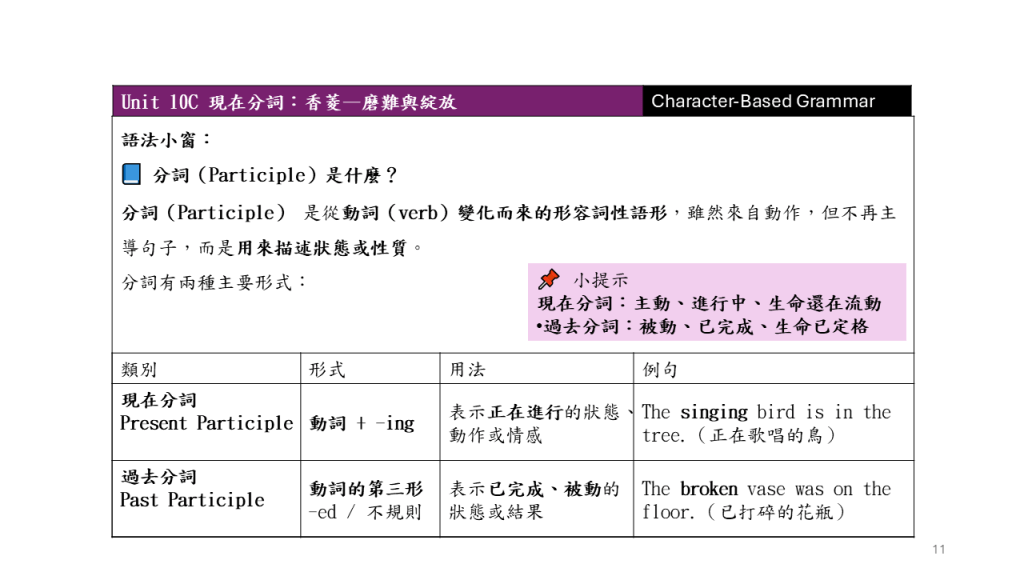
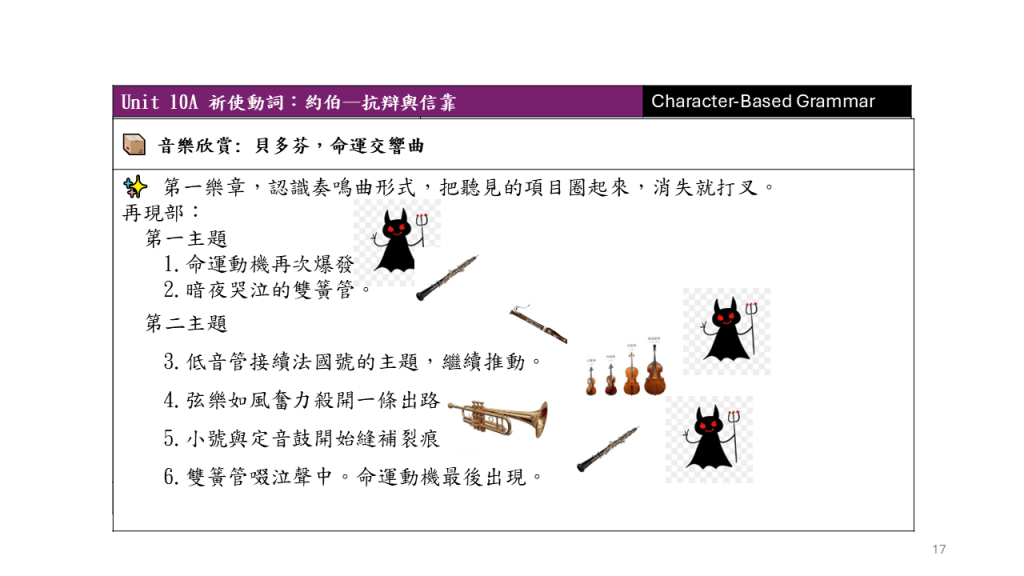
- 用音高模仿小雞喝水,為老鼠故事配音響
- 在《老爺鐘》中用身體記錄節奏,在《長耳人》中把音樂畫成圖像
- 用語音音節探索節奏(水果),用符號卡創作長音短音(丫頭丫)
- 用音磚的高低編織語音特徵(冬瓜冬瓜)
- 用肢體動作表現音樂概念(小蝌蚪)
- 用兒歌句法分辨樂句與屬和弦,並體驗停頓與推進(兩個海)
Teaching Practices|
- Imitating the pitch of chicks sipping water, creating sound effects for a mouse tale
- Tracing musical energy with body movement (Grandfather’s Clock), painting music into images (Long-Eared Folk)
- Exploring rhythm through language syllables (Fruit), composing long and short notes with symbolic cards (Ya-tou-ya)
- Using tonal bricks to build speech features (Winter Melon Song)
- Expressing musical concepts through gestures (Little Tadpoles)
- Recognizing phrases, cadences, and punctuation through song and movement (Two Seas)
- 📖 語文的暖流
- The Warm Current of Language
— Cultivating the Wings of Thought and Feeling
願景|
讓語言成為思想與情感的雙翼,
讓文字長出生命的溫度與靈魂的呼吸。
Poetic Vision|
Let language become the wings of thought and feeling,
where words carry warmth
and sentences breathe the soul’s quiet fire.
理念|
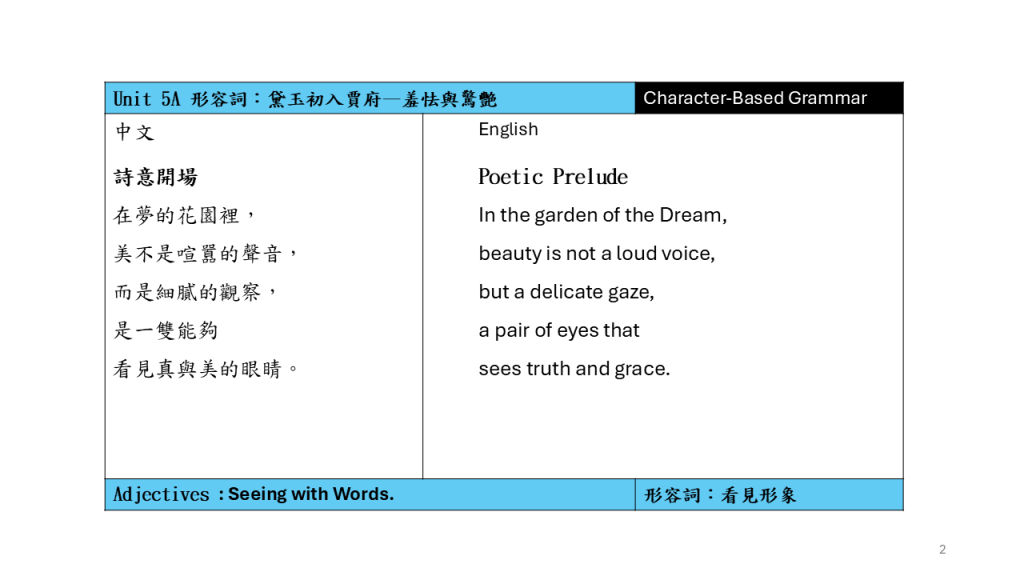
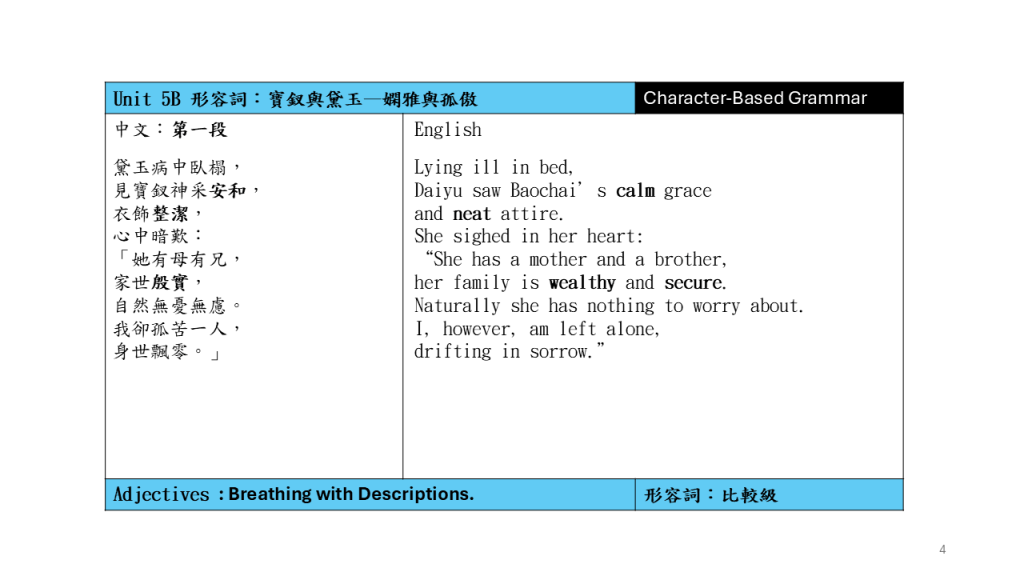
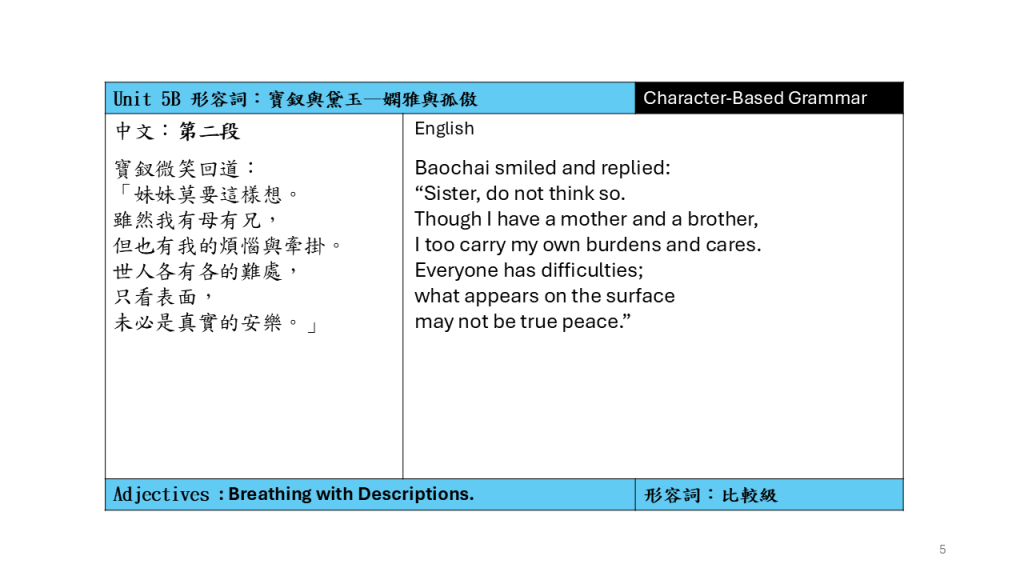
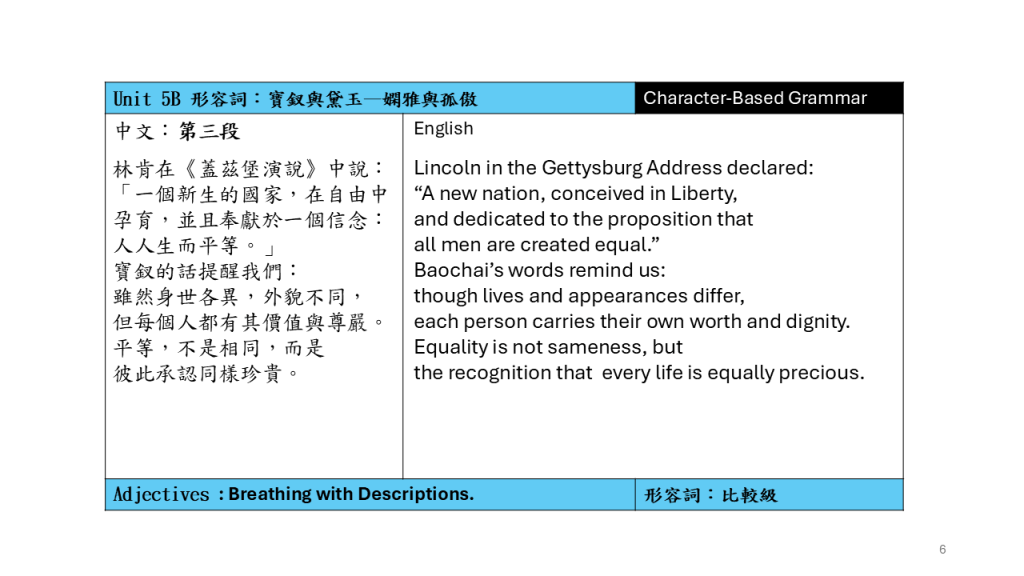
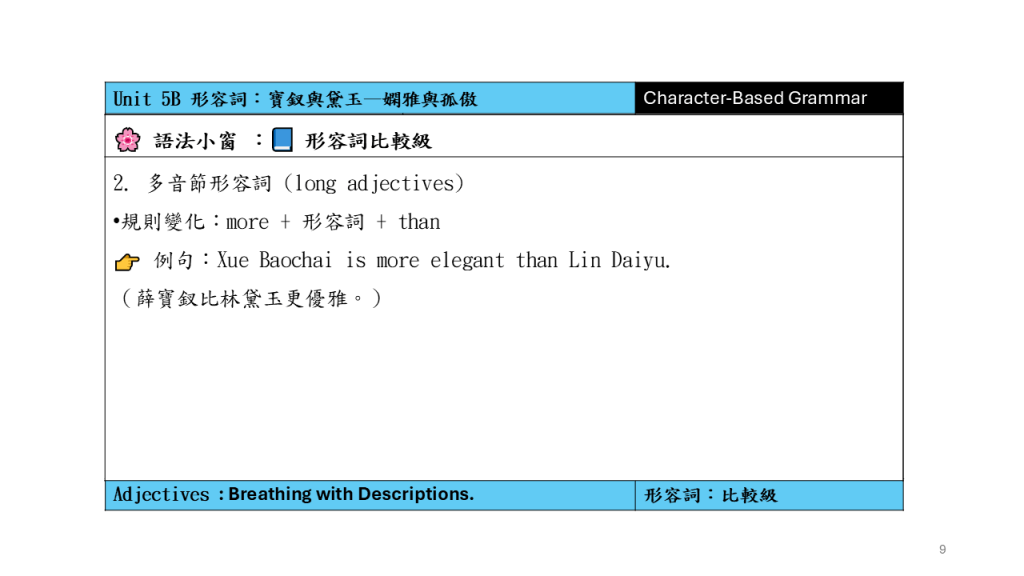
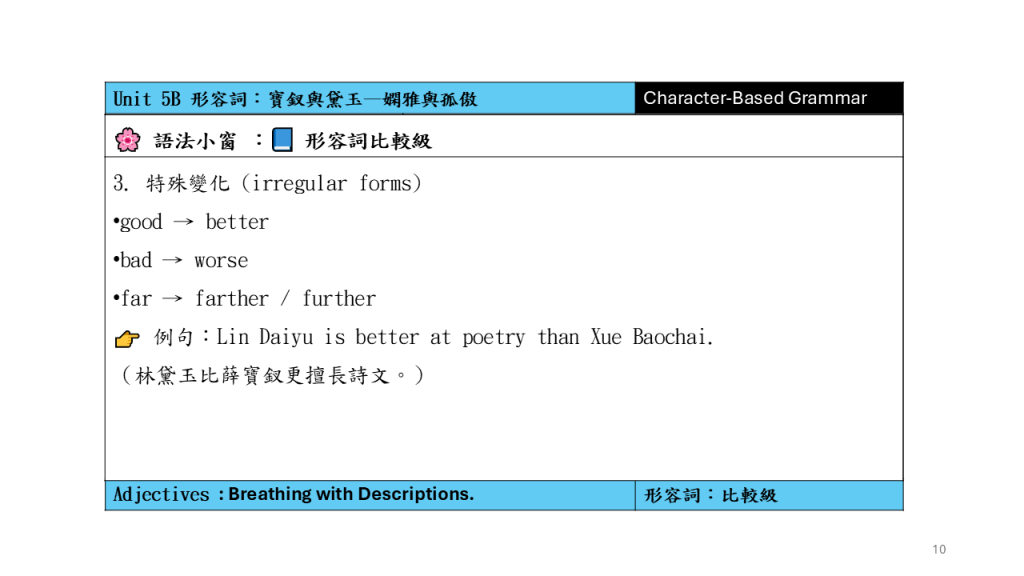
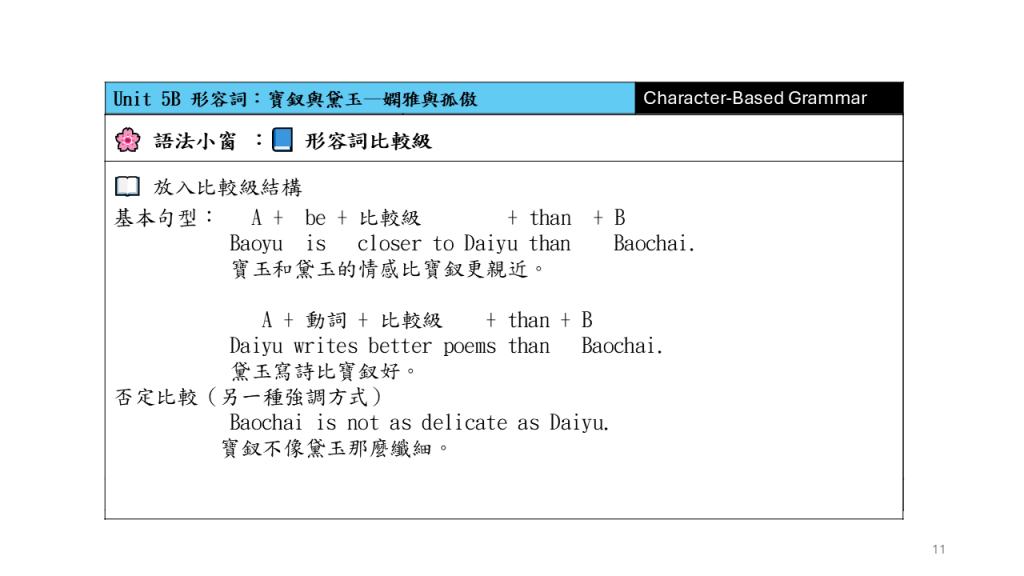
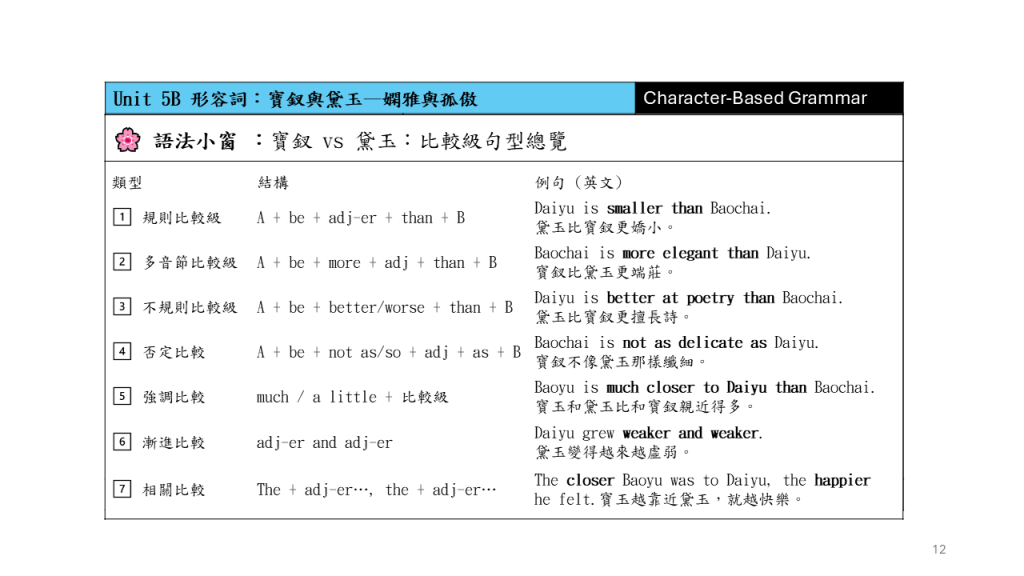
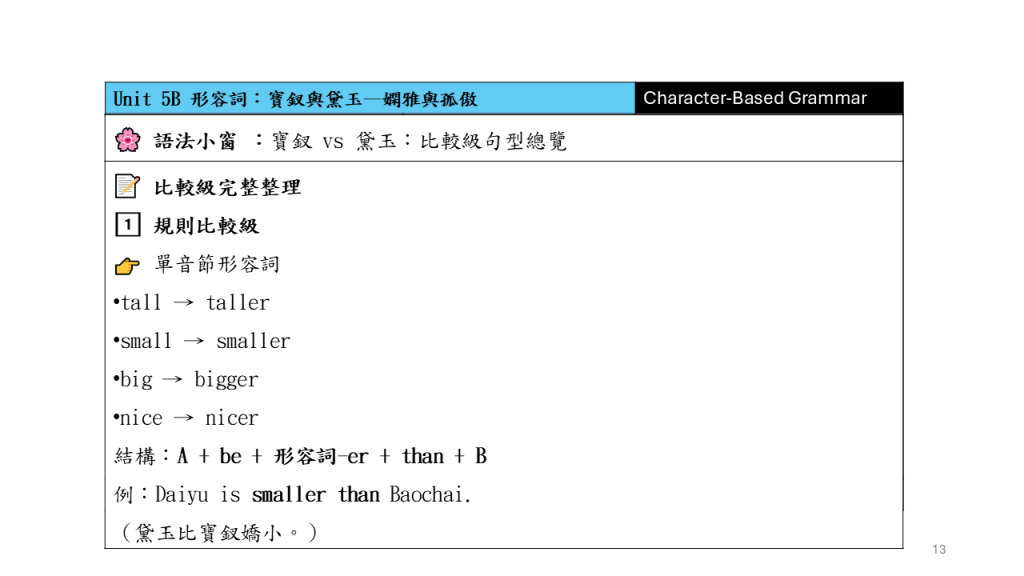
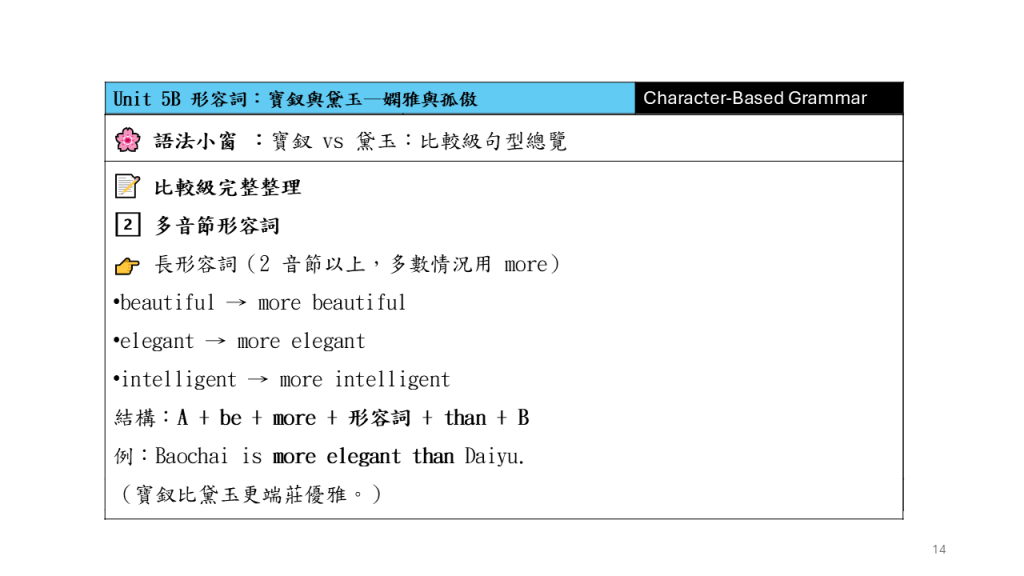
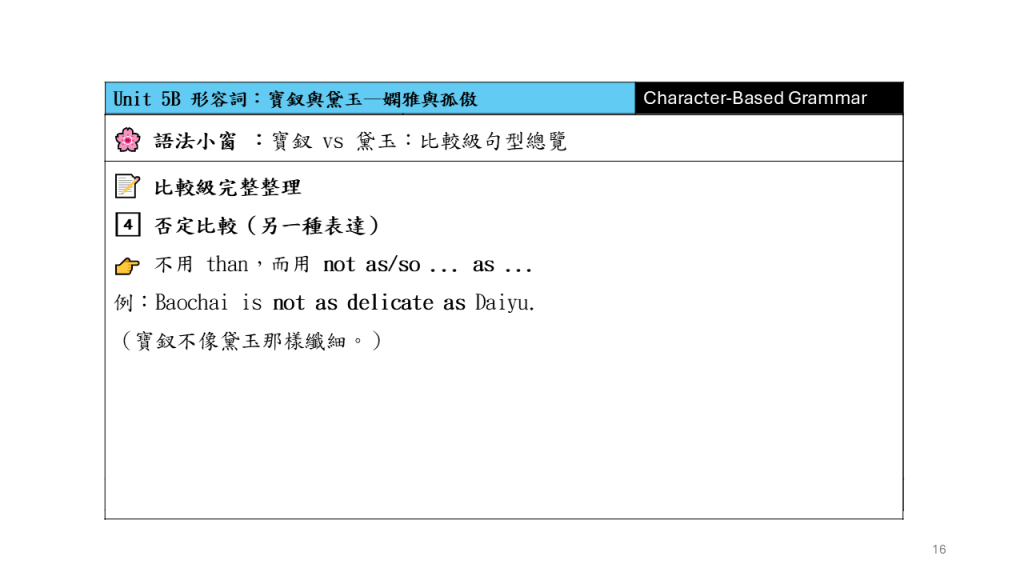
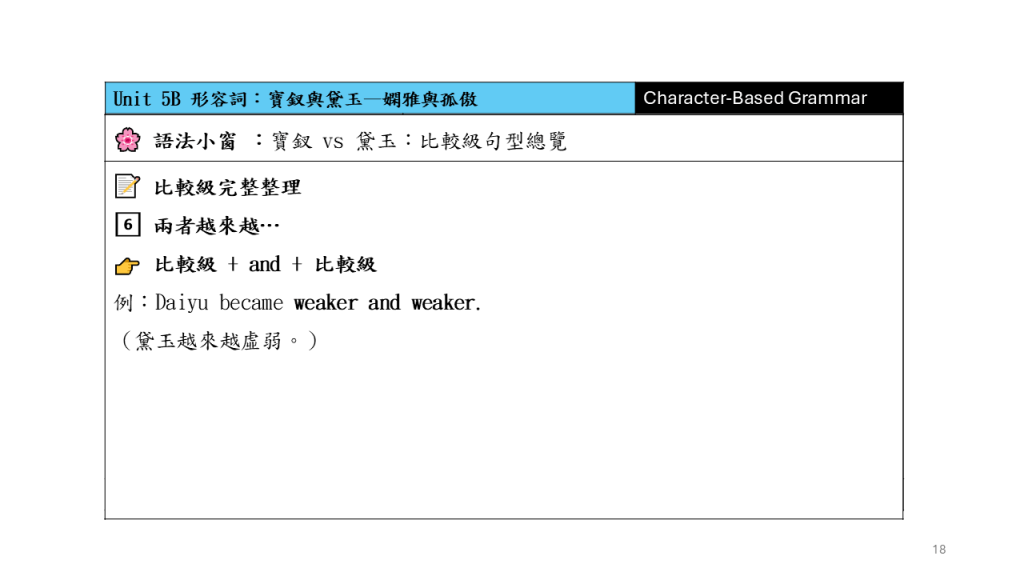
從一開始,我們讓孩子以中英對照浸潤語言。
中文的詩意意象,在英文的具體語法裡變得清晰;
英文的結構之美,也在中文的語感中生根。
這不是翻譯或比較,
而是一面映照的鏡子,
讓孩子像學母語般在浸潤中自我覺察。
在這種浸潤裡,
他們不怕腦中空白,
因為可以猜、可以對、可以繼續;
語言於是變成一種自我建構的樂趣。
Core Philosophy|
From the very beginning,
we let children encounter Chinese–English side by side.
The poetic imagery of Chinese becomes clear through the structure of English,
and the beauty of English composition takes root within Chinese rhythm.
It is not translation,
but a mirror of reflection
where they naturally notice patterns as they would in their mother tongue.
Immersed in this way,
they do not fear a blank mind;
they can guess, they can check, they can keep going—
and language becomes a joy of self-discovery.
實作|
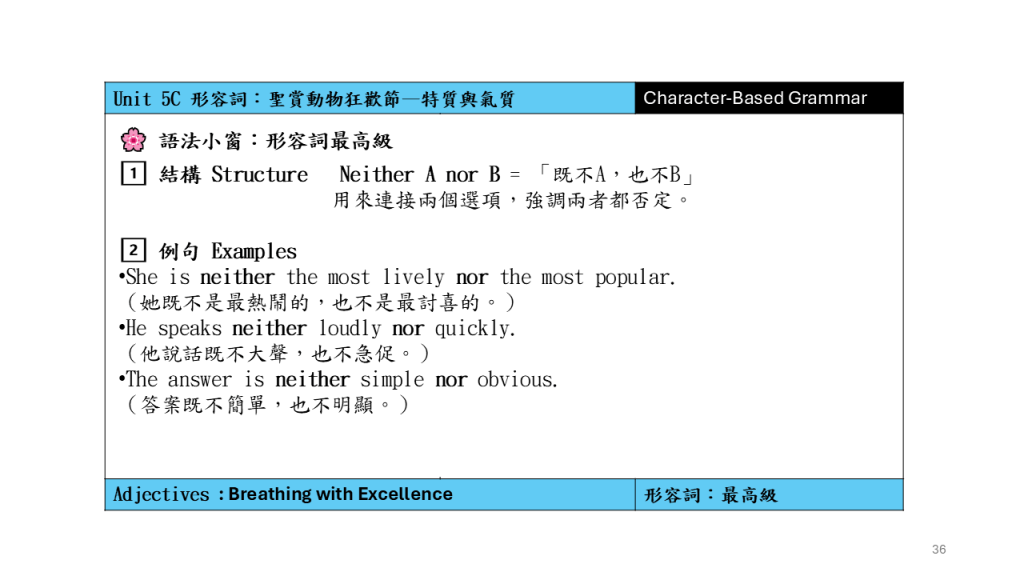
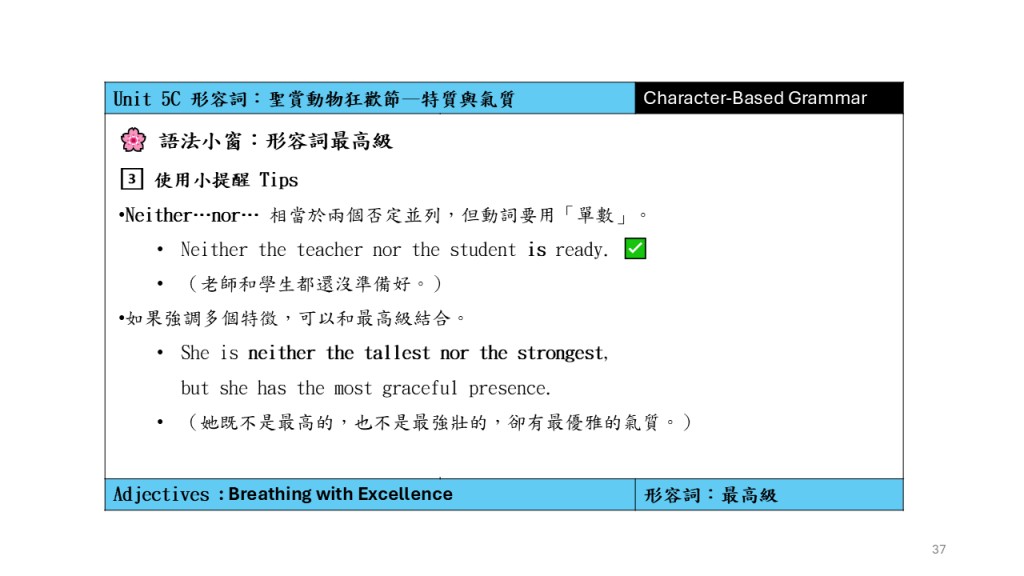
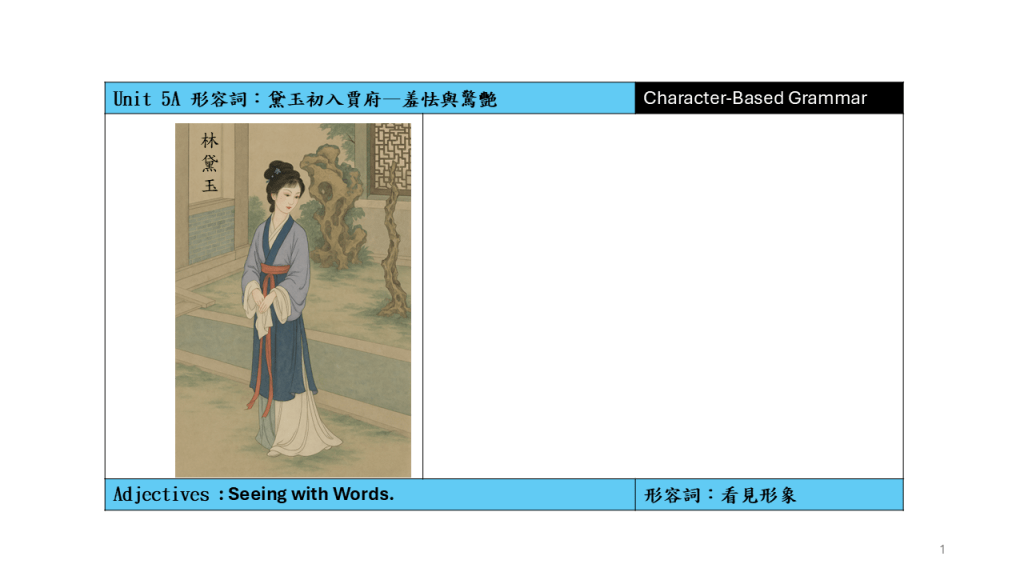
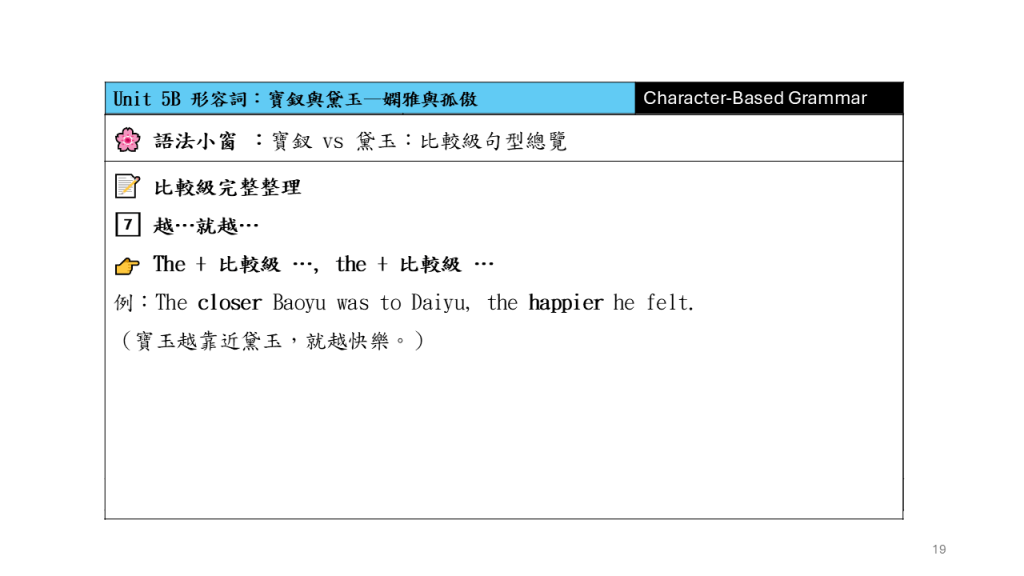
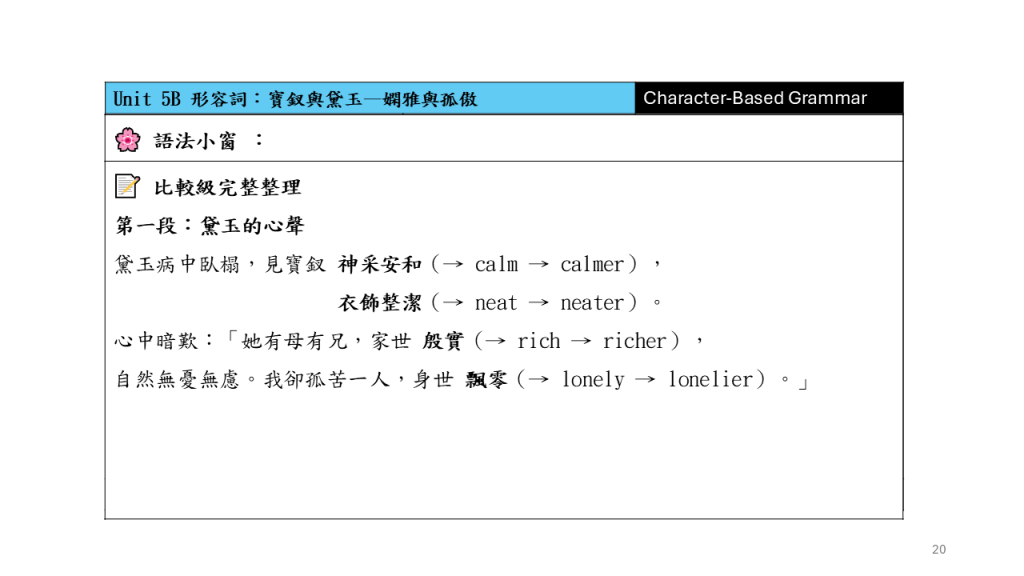
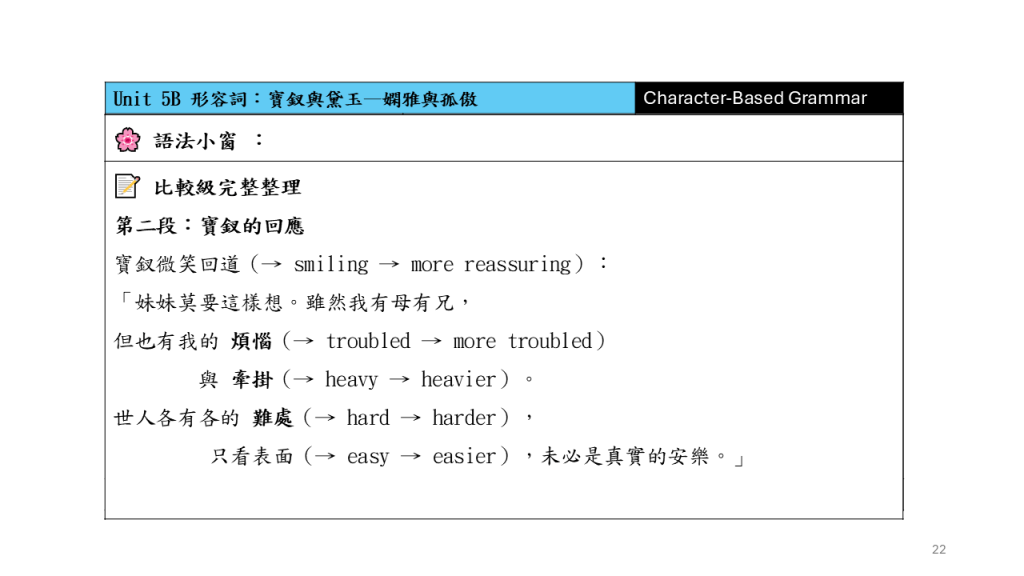
- 從角色的特徵到品格,再到格局與世界觀的建構
- 熟悉故事後,先創造自己的版本(先寫後讀)
- 接力把故事化為劇本、舞台演出
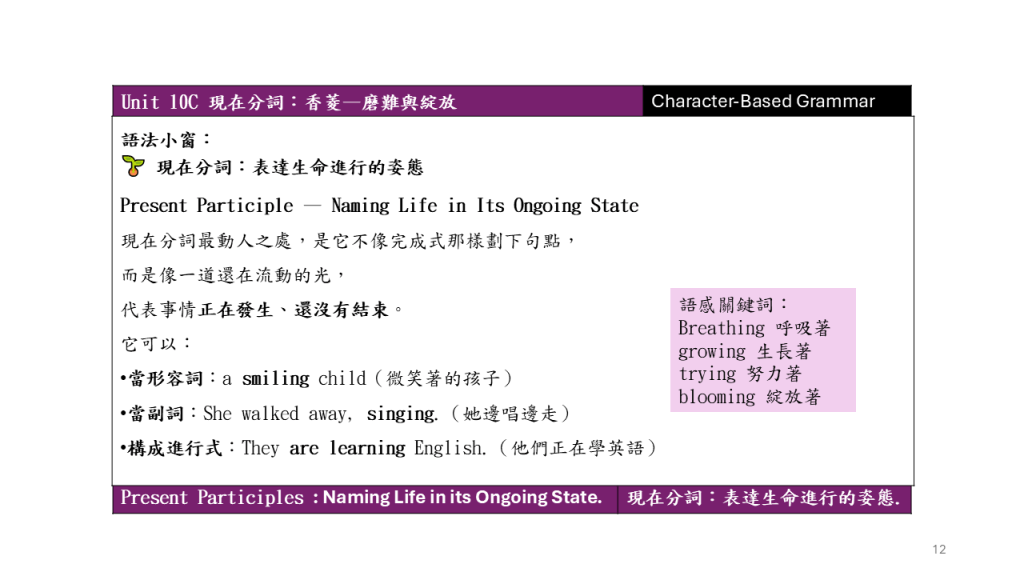
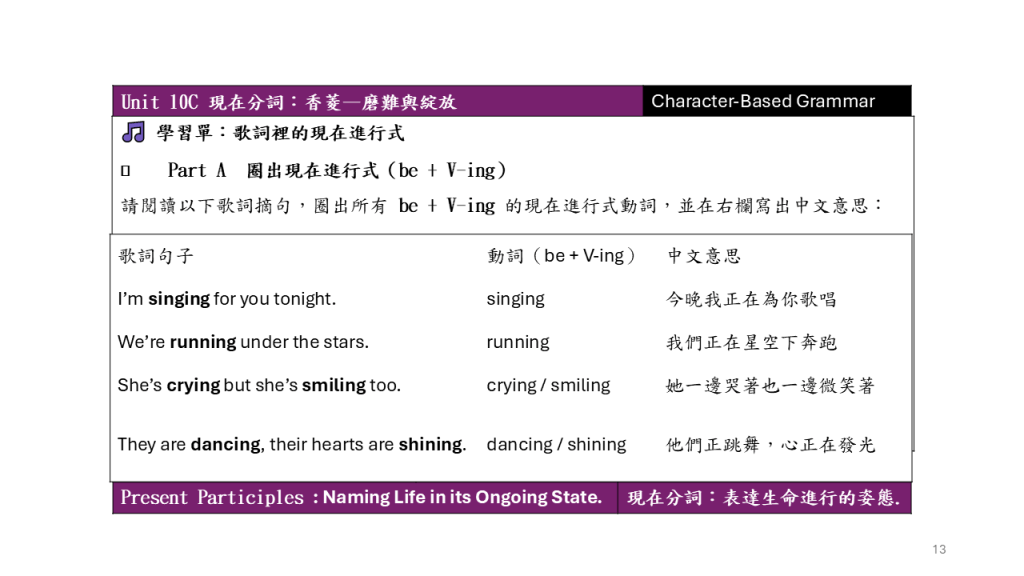
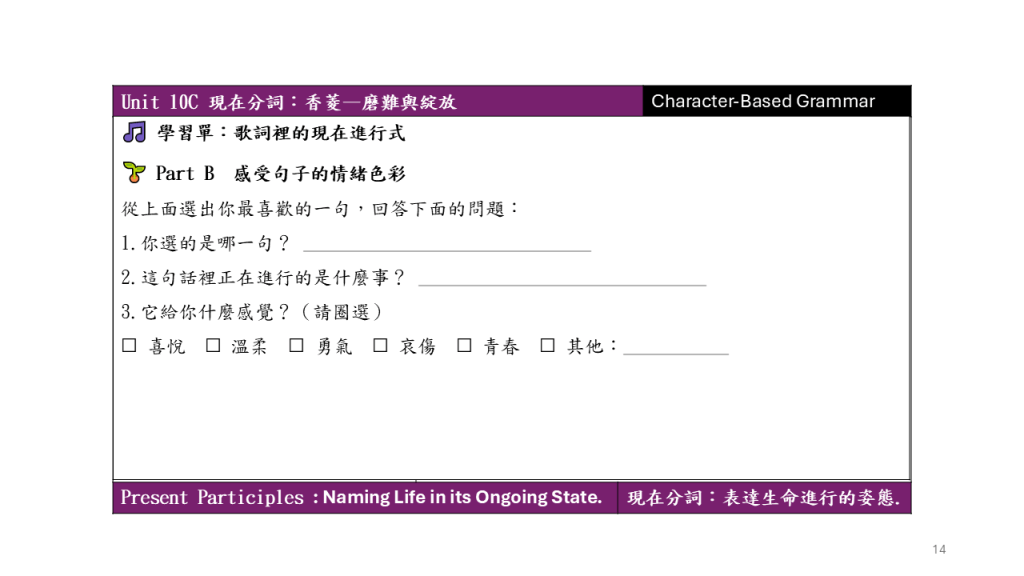
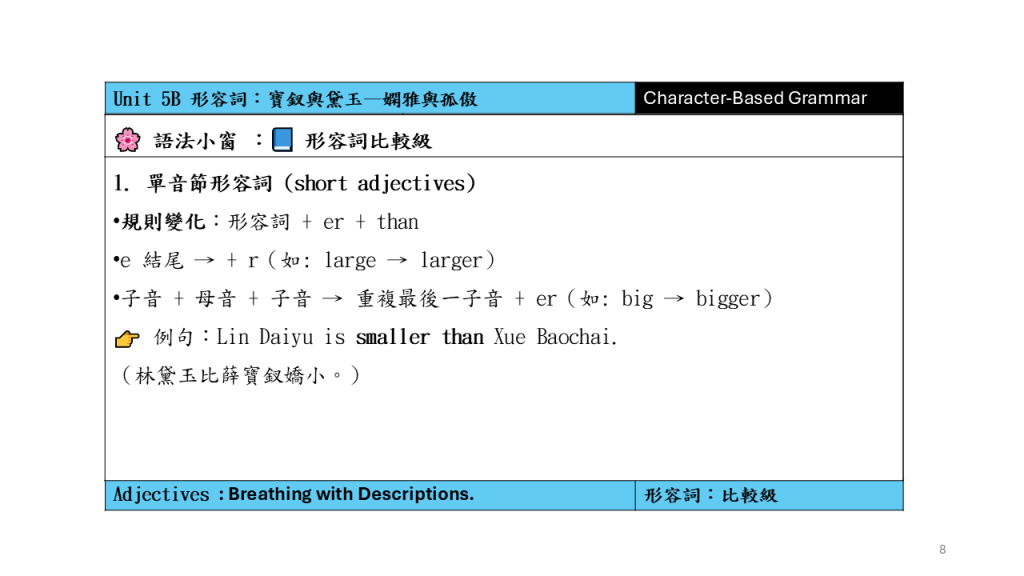
- 用音樂智能學語法:將文法藏進故事與生活中
Teaching Practices|
- Building “character” from traits to virtues to worldview
- Writing their own versions of familiar stories (write before read)
- Turning stories into scripts, then into stage plays in teams
- Learning grammar through music, embedding it within story and daily life
- 📜 經典的暖流
- The Warm Current of the Classics
— 讓經典說話,讓靈魂記得
願景|
經典是歲月裡閃耀的恆星,
它們橫越千年而來,
邀請我們與過往的靈魂一同思考,
同聲吟唱。
Poetic Vision|
Classics are stars that shine across time,
travelling through centuries
to invite us to think with ancient minds
and sing in chorus with voices from afar.
理念|
我們不把經典當作艱澀的文本,
而當作一種能與當下對話的活語言。
當孩子在熟悉的生活情境中遇見經典,
他們不只是在記誦文字,
而是在學習如何與歷史共鳴、與智慧對話。
Core Philosophy|
We do not treat the classics as rigid, difficult texts,
but as living languages
that speak to the present moment.
When children encounter the classics
within familiar, living contexts,
they are not merely memorizing words—
they are learning how to resonate with history
and converse with wisdom.
實作|
- 讓經典進入環境,用空間與時間承載文本的氣息
- 藉由戲劇化演出,將經典故事化為可親近的生命經驗
- 引導孩子從經典中找出反覆出現的結構或主題,建立歷史觀與格局感
Teaching Practices|
- Infusing the environment with classics—letting space and time carry their breath
- Reimagining classic tales through dramatic performance, making them lived experience
- Guiding children to trace recurring patterns and themes in classic texts,
nurturing their sense of history and the vastness of perspective
- 🌊 自然的暖流
- The Warm Current of Nature
— 讓科學開口說話
願景|
讓孩子聽見大地的低語,
讓他們看見規律背後的溫柔,
在自然的脈動裡,
學會敬畏,也學會親近。
Poetic Vision|
Let children hear the whispers of the earth,
see the gentleness behind all patterns,
and within nature’s steady pulse,
learn both reverence and intimacy.
理念|
自然不只是知識的清單,
而是一種與世界建立關係的方式。
當我們帶領孩子觀察、傾聽、體驗,
他們所學的不只是「知道」,
而是與天地相處的姿態——
謙卑、柔軟、又堅定。
Core Philosophy|
Nature is not a checklist of facts,
but a way of forming a relationship with the world.
When children are led to observe, listen, and experience,
they learn not only “to know,”
but how to dwell with the earth—
with humility, with softness, and with strength.
實作|
- 觀察水的流動,體會「上善若水」:低處包容、遇形而變、柔中有力
- 觀察潮汐每天漲兩次,體會「言善信」:水守時守約、從不失信
- 從種植、氣象、地景等專題探索中,體驗四季的秩序與萬物的連動
Teaching Practices|
- Observing the flow of water to grasp “the highest goodness is like water”:
it embraces the lowly, adapts to every shape, and carries quiet strength
- Watching the tides rise twice daily to see “faithfulness in nature”:
water keeps its promises, never failing its appointed time
- Experiencing the rhythm of the seasons and the interwoven life of all things
through projects in gardening, weather, and landscape
- 🔢 數理的暖流
- The Warm Current of Logic & Math
— 讓數學開口說話
願景|
讓數字不再冰冷,
讓規律不再遙遠,
讓孩子聽見邏輯的韻律,
在推理的節奏中
發現世界的秩序之美。
Poetic Vision|
Let numbers no longer be cold,
let patterns no longer feel distant.
Let children hear the rhythm of logic
and find the beauty of order
within the cadence of reasoning.
理念|
數理不只是解題的技巧,
而是用結構說話的語言。
當孩子能用數字與圖像
來表達觀察與思考,
數學就不再是記憶與演算,
而是理解世界的語法。
Core Philosophy|
Math and logic are not just techniques for solving problems,
but languages that speak through structure.
When children use numbers and images
to express their observations and thoughts,
mathematics ceases to be memorization and calculation—
it becomes the grammar for understanding the world.
實作|
- 用數線記錄潮汐的起落,將自然現象轉化為數學敘事
- 用圖表整理天氣紀錄,讓資料化為視覺化語言
- 用幾何與比例創作藝術作品,理解美感背後的數學邏輯
Teaching Practices|
- Using number lines to chart the rise and fall of tides, turning nature into math narratives
- Organizing weather data into charts, turning information into visual language
- Creating art with geometry and proportion to discover the logic of beauty
- 🌬 序段四|邀請與承諾
- The Invitation and the Promise
在這片以愛為風的天空裡,
三股新的暖流正在湧動——
語文智能、自然智能、數理智能,
在孩子的心中交織出飛行的軌跡。
In this sky where love becomes the wind,
three new warm currents are rising—
linguistic, naturalistic, and logical intelligences,
weaving flight paths through the hearts of children.
語文智能,讓語言成為思想與情感的翅膀,
讓他們不只是背誦文字,
更能用自己的話組織觀點、敘述經驗,
用精準的語句傳遞真理與愛。
Linguistic intelligence makes language
the wings of thought and feeling—
so they not only recite words,
but learn to form opinions, narrate experience,
and speak truth and love with precision.
自然智能,讓科學開口說話。
透過水的流動,他們學會包容與信守;
透過四季的秩序,他們看見萬物的連動與共生,
在觀察中誕生敬畏,在探索中長出柔軟與堅定。
Naturalistic intelligence lets science speak.
Through the flow of water, they learn to embrace and to keep promises;
through the rhythm of seasons, they see the interwoven life of all things—
reverence born from observation,
gentleness and strength grown from exploration.
數理智能,讓邏輯開口說話。
在用數線畫潮汐、用圖表記錄天氣的過程中,
他們不只是學會解題,
更在敘事中看見規律的優雅、
在秩序中發現世界的詩意。
Logical-mathematical intelligence gives voice to logic.
As they trace tides with number lines
and chart weather with graphs,
they learn not only to solve problems
but to see the elegance of order—
and the quiet poetry within structure.
願《如鷹展翅》
成為一場共同的飛行——
無論是老師、家長,
還是每一位學習者,
都能在這片天空裡
找到屬於自己的暖流,
並親身見證,
應許是真的。
風——是真的。
May Like Eagles Soaring
become a shared flight—
for teachers, parents,
and every learner who joins this journey.
May each one
find their own warm current in this sky,
and witness for themselves
that the promise is real—
and the wind is real.











































 雅歌教育典藏站