Beauty of Sharing: Sending Oil Rice
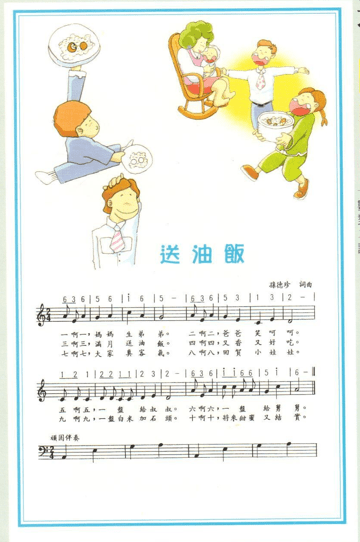
歌詞 Lyrics
中文
複製編輯一呀一,媽媽生弟弟
二呀二,爸爸笑呵呵
三呀三,滿月送油飯
四呀四,又香又好吃

五呀五,一盤給叔叔
六呀六,一盤給舅舅
七呀七,大家真客氣
八呀八,回賀小娃娃

九呀九,一盤白米加石頭
十呀十,將來甜蜜又結實
English (singable version)
pgsql複製編輯One by one, a baby boy is born,
Two by two, Dad’s laughing full of joy.
Three by three, oil rice to share with friends,
Four by four, it smells so good, no end!

Five by five, a plate for Uncle dear,
Six by six, for Mother’s brother here.
Seven by seven, thanks to all we meet,
Eight by eight, they bless the newborn sweet.

Nine by nine, return with rice and stone,
Ten by ten, may life be sweet and strong at home.
單元目標 Unit Goal
回應
Response
教具 Teaching Aids
節奏樂器 Rhythm instruments
背景說明 Background for Teachers and Parents
中文
- 押韻使得兒歌好唸好聽,藉著數字和句尾的押韻,可以預備幼兒對和聲的概念。
- 藉著送油飯的民俗,讓幼兒認識「禮尚往來」——分享喜悅,也學會以回應表達感謝。
English
- Rhyme makes nursery songs easy to recite and pleasant to hear. Using numbers and rhyming endings helps prepare children to sense harmony.
- Through the tradition of sending oil rice, children learn about reciprocal giving—sharing joy and responding with gratitude.
民俗介紹 Cultural Story
中文
送油飯是台灣民間的一種禮俗:
通常某家添了兒子(尤其是第一胎),就在滿月那天,煮很多油飯分送給鄰居和親友,讓大家一起分享。收到油飯的家庭要將油飯收下,將空盤子裝一盤白米、白米上壓一塊小石頭,送還人家,並且說幾句祝福的話。
English
Sending oil rice is a traditional Taiwanese custom:
When a family welcomes a baby boy (especially the firstborn), they cook large batches of oil rice on the baby’s full moon day and share them with neighbors and relatives. Those who receive the rice return the empty plate filled with white rice and topped with a small stone—symbolizing blessings of strength and prosperity—and say words of congratulations.
互動過程 Interactive Activities
一、唱兒歌 Sing the Nursery Song
- 教師先介紹送油飯的民俗,再帶幼兒唱一遍兒歌。
二、數字與押韻練習 Number and Rhyme Practice
- 引導幼兒注意歌詞中數字的順序與句尾的押韻,跟著拍手或敲樂器。
三、角色扮演 Role-Play
- 模擬「送油飯」的情境:一組幼兒送油飯,另一組幼兒回送白米與祝福,學習互動禮貌。
四、延伸討論 Extension
- 問孩子:你家有什麼分享喜事的習慣?
- 引導孩子說出祝福語,體驗「給與回應」的美好。
 雅歌教育典藏站
發表留言