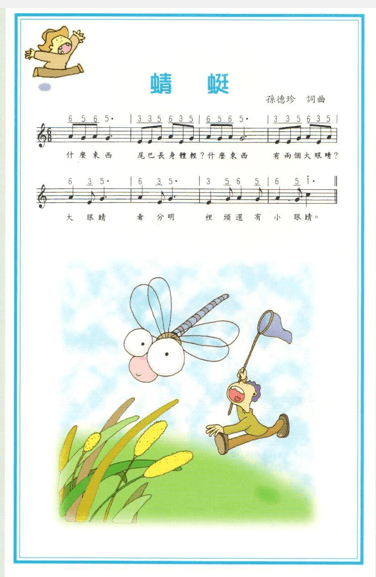
孫德珍 詞曲 | Lyrics & Music by Sun Der-Jen
歌詞 Lyrics
複製編輯什麼東西 尾巴長身體輕
什麼東西 有兩個大眼睛
大眼睛看分明
裡頭還有小眼睛
English (literal meaning):
vbnet複製編輯What is it? Tail long and body light.
What is it? With two big eyes so bright.
Big eyes see things clear and keen,
Inside, there are tiny eyes unseen.
單元目標 Unit Goal
板眼(重拍與弱拍)
Beats and Sub-beats (Strong Pulse and Weak Pulse)
教具 Teaching Aids
節奏樂器(響板、拍手、打擊樂器)
Rhythm instruments (clappers, hand claps, percussion)
背景說明 Background for Teachers and Parents
中文
國劇中有一板一眼的節奏;板代表重音,眼代表弱音。本單元藉蜻蜓的複眼來介紹音樂中的拍子:規律拍中重拍和輕拍分配的週期。國劇中有一板一眼和一板三眼,本單元中的一板二眼在中國國劇中並不存在,只是作者引伸以介紹複拍子。
English
In traditional Chinese opera, rhythm is described as “one beat, one eye”: the beat (板) marks the strong accent, while the eye (眼) marks the weaker accent. This lesson uses the compound eyes of a dragonfly to introduce musical meter—the cycle of strong and weak beats. While Chinese opera traditionally uses “one beat one eye” and “one beat three eyes,” this lesson introduces “one beat two eyes” as a creative way to explore compound meter.
活動引導語 Instruction to Children
中文
老師告訴幼兒:形容一個人唱歌拍子抓得準,我們說他唱得有板有眼;一個人做事該怎樣就怎樣,我們也稱讚他做事有板有眼。
English
Tell the children: When someone sings with precise rhythm, we say they sing “with beat and eye”. When someone does things properly and in order, we also praise them as “having beat and eye.”
- 互動遊戲 Interactive Game: 老師當蜻蜓的大眼睛 Teacher as the Dragonfly’s Big Eye
(1) 一板一眼 One Beat, One Eye
- 中文
一個大眼睛裡面有一個小眼睛。老師拿響板拍一下後(大眼睛—重拍),幼兒以右手拇指、食指圈成眼睛形狀在左手手心上敲一下(小眼睛—弱拍)。一邊拍、一邊唱口訣「板、眼」,保持拍的進行。 - English
One big eye contains one small eye. The teacher claps the clapper once (big eye—strong beat). Children form a circle with thumb and index finger of the right hand and tap the left palm (small eye—weak beat), chanting “beat, eye” while keeping the rhythm steady.
(2) 一板二眼 One Beat, Two Eyes
- 中文
一個大眼睛裡面有兩個小眼睛。老師拿響板拍一下後(大眼睛—重拍),幼兒以右手拇指、食指圈成眼睛形狀在左手手心上敲兩下(小眼睛—弱拍)。一邊拍、一邊唱口訣「板、眼、眼」,保持拍的進行。 - English
One big eye contains two small eyes. The teacher claps the clapper once (big eye—strong beat). Children tap twice on the left palm (small eyes—weak beats), chanting “beat, eye, eye” to keep the rhythm.
(3) 板眼卡片練習 Card Practice for Beat and Eye
- 中文
老師揭示兩張板眼卡,分別代表「一板一眼」與「一板二眼」,讓幼兒猜該如何拍。 - English
The teacher shows two rhythm cards: “one beat one eye” and “one beat two eyes.” Children guess and demonstrate the corresponding clapping pattern.
律動化音樂欣賞 Rhythmic Music Appreciation
聖桑《動物狂歡節》— 大象
Saint-Saëns Carnival of the Animals — The Elephant
中文
- 跟著音樂裡的大象腳步,注意大象的腳很重,走得笨重。(踩在重音上)
- 大象出遊:
- 看見朋友握握手
- 看到河流,大象下去洗澡、互相噴水、水花閃亮
- 結隊回家,踩在重拍上。
English
- Follow the elephant’s footsteps in the music. Notice how its heavy feet move clumsily—step on the strong beats.
- Elephant’s outing:
- Shake hands with friends they meet
- Jump into the river, splash water, and see sparkling drops
- March home in a line, stepping on each strong beat.
合奏活動 Ensemble Activity
中文
會唱本單元歌曲後,老師發給幼兒節奏樂器,先由老師當板(大眼睛),幼兒當眼(小眼睛)。再由幼兒選一人當板,其他人當眼,一起合奏。也可以讓幼兒只敲板的節奏。
English
After learning the song, give each child a rhythm instrument. The teacher first plays the beat (big eye), while children play the eyes (small beats). Then, let a child take the role of beat, while others play the eyes, creating an ensemble together. Children can also try playing only the beat part for variation.
 雅歌教育典藏站
發表留言