Beauty of Sharing: Water
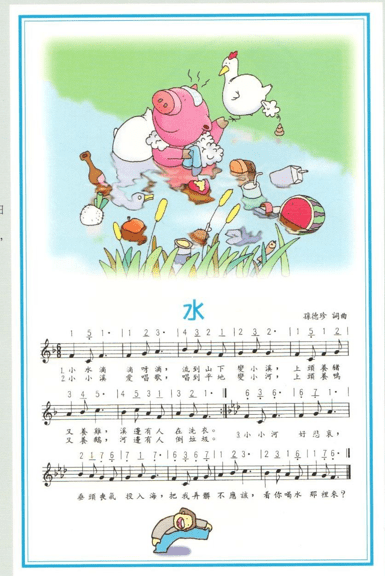
- 歌詞 Lyrics
中文
複製編輯小水滴,滴呀滴,流到山下變小溪。
上頭養豬又養雞,溪邊有人在洗衣。

小小溪,愛唱歌,唱到平地變小河。
上頭養鴨又養鵝,河邊有人倒垃圾。

小小河,好悲哀,垂頭喪氣投入海。
把我弄髒不應該,看你喝水哪裡來?
English (singable version)
pgsql複製編輯Little raindrops, drip-drop fall,
Down the mountain, streams grow tall.
Up above, pigs and chickens stay,
By the stream, they wash all day.

Little stream, it loves to sing,
Reaches flatlands, turns to spring.
Up above, ducks and geese reside,
By the river, trash is thrown inside.

Little river, sad and grey,
Hangs its head and drifts away.
Pollute the water — is it right?
Where will your clean water flow tonight?
- 單元目標 Unit Goal
和聲
Harmony
- 教具 Teaching Aids
節奏樂器 Rhythm instruments
- 背景說明 Background for Teachers and Parents
中文
本單元透過三段故事與歌曲,介紹水從小水滴變成溪流、河流再到海洋的過程,並引導幼兒察覺音樂中三度音變化所帶出的情感轉換(大調歡快、小調悲傷)。活動同時帶出環境教育,讓幼兒思考乾淨水源的重要性與污染帶來的影響。
English
This unit uses three-part storytelling and song to illustrate how water flows from raindrops to streams, rivers, and finally to the ocean. It introduces the concept of third intervals in music and how changes between major and minor modes express different emotions (joy vs. sadness). The activities also include environmental education, guiding children to reflect on the importance of clean water and the effects of pollution.
- 資料庫故事 Story
中文
天空裡住著一滴小雨滴。
有一天,它遇見了其他的小雨滴,它們都想一起下地上玩,於是它們結成大大的水滴,落在山上。
小雨滴遇到了新朋友,它們變成小溪。
小溪快樂地往前跑,一路上看到了人養雞,又有人洗衣。
小溪唱歌,可它並沒有生氣,還是快樂地唱著歌往前跑。
不久,遇到了更多朋友,它們又結成更大的隊伍,成為小河。
小河唱著歌,一邊唱一邊走,看到了人養了好多豬和鵝。
人們把豬和鵝的大便都倒到河裡,小河氣得臉都紅了。
然後,小河又看見有人把垃圾往河裡倒,連吐也來不及!
小河忍不住哭了起來。
人們還是照樣把髒東西倒進河裡,小河生病了。
它病得越來越重,越來越醜,越來越臭。
最後,小河往海裡一跳,讓人們再也看不到它。
English
In the sky lived a tiny raindrop.
One day, it met other little raindrops, and they all wanted to fall to the earth to play. They joined together into a big drop of water and fell onto the mountains.
The raindrop met new friends and became a stream.
The stream happily ran forward, seeing chickens and people washing clothes along the way.
The little stream sang songs and kept flowing joyfully, without anger.
Soon, it met even more friends, joining together to become a river.
The river sang as it flowed, passing by where people raised pigs and geese.
But people dumped animal waste into the river, making it turn red with anger.
Then they threw garbage into the river, and it barely had time to breathe!
The river began to cry.
Yet people continued dumping trash, and the river grew sicker — dirtier, uglier, and smellier.
Finally, the river leapt into the sea, disappearing from sight.
- 互動過程 Interactive Activities
一、故事導入 Storytelling
- 老師講述《水》的故事,引導幼兒感受水的旅程與心情變化。
二、歌曲學習 Song Learning: 水
- 第一段與第二段為大調(歡快)。
- 第三段轉為小調,與前兩段形成情感對比。
- 引導幼兒聽出三度音變化。
三、律動創作 Movement with Music
- 分三段音樂表演不同情緒的律動:
- 第一段:輕快跳躍(每小節兩次)
- 第二段:悠閒遊走(每小節兩次)
- 第三段:沉重不滿(每小節兩次)
四、討論與延伸 Discussion
- 水可以為我們做什麼?
- 故事中的人犯了什麼錯?
- 如果沒有乾淨的水可以用,我們的生活會怎樣?
- Interactive Activities
1. Storytelling
- The teacher narrates the story of Water, guiding children to feel the journey of water and its emotional changes.
2. Song Learning: Water
- The first and second verses are in major mode (cheerful).
- The third verse shifts to minor mode, creating an emotional contrast with the first two.
- Guide children to notice the change in third intervals within the melody.
3. Movement with Music
- Perform different movements to express the emotions of each musical section:
- First verse: Light, playful jumps (twice per measure).
- Second verse: Gentle, leisurely walking (twice per measure).
- Third verse: Heavy, discontented movements (twice per measure).
4. Discussion and Extension
- What can water do for us?
- What mistakes did the people in the story make?
- If we had no clean water, what would our life be like?
 雅歌教育典藏站
發表留言