1. 單元目標 Unit Focus
中文
單元目標:長短
教具:音磚 C D E F G
English
Focus: Long and short note values
Teaching Tools: Tone bars C D E F G
2. 給老師和家長 For Teachers and Parents
中文
唱本單元歌曲時,每一句句尾的長音,都要搖動尾巴四下,讓幼兒學習音符的音長,並使其養成足拍的觀念。
English
When singing this song, children should sway their “tails” four times on each phrase’s final long note. This helps them internalize note durations and develop a steady sense of beat.
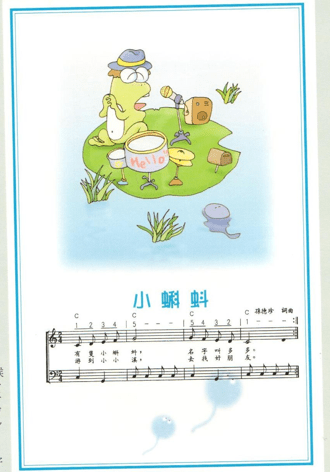
3. 歌曲 Song
中文
一隻蝌蚪一個頭,兩隻眼睛黑黝黝,
一條尾巴在後頭,搖搖擺擺水裡游。
English (Note)
Lyrics are presented in Chinese to maintain the rhyme and imagery. The melody aligns with the natural rhythm of Mandarin, supporting children’s singing by ear.
4. 資料庫 Cultural Note
中文
故事:小蝌蚪尋友記
從前在一個小池塘裡,住著幾雙小蝌蚪,其中最聰明的一隻小蝌蚪名字叫「多多」。
有一天,天空下起大雨,多多住的池塘很快就淹滿了水,所有蝌蚪都被大雨沖散了。
多多拼命游呀游,終於游到一條小溪裡。他想起了被沖散的好朋友,忍不住流下淚來。
這時候剛好有一隻青蛙路過,就問他:「孩子,你為什麼哭呢?」
多多說:「我現在一個朋友都沒有了。」
青蛙說:「怎麼會呢?這條小溪往前去沒多遠,就住著好多好多蝌蚪呢,你應該去找一找新朋友,而不要在這裡哭啊!」
多多擦乾眼淚,繼續往前游,終於看到好多小蝌蚪。
他好開心,因為他又有新朋友了。
English
Story: Little Tadpole’s Search for Friends
Once upon a time, in a small pond, lived several little tadpoles. The smartest one was named Dodo.
One day, heavy rain began to fall, and the pond where Dodo lived quickly overflowed. All the tadpoles were scattered by the storm.
Dodo swam desperately until he reached a small stream. Thinking of his lost friends, he couldn’t help but cry.
Just then, a frog passed by and asked, “Child, why are you crying?”
“I don’t have any friends anymore,” Dodo replied.
The frog said, “That can’t be true! Not far ahead along this stream, there are many, many tadpoles living there. You should go and find new friends instead of staying here to cry.”
Dodo wiped away his tears and kept swimming forward until he saw many other tadpoles.
He was so happy — he had found new friends again.
5. 互動過程 Interactive Activity
中文
- 故事
將導言轉為小蝌蚪的故事,並讓幼兒聽。 - 律動
- 將蝌蚪放在肩上或手掌上,讓幼兒邊唱邊搖尾巴。
- 幼兒學習在歌曲的長音處搖動尾巴四下,每句句尾延長兩拍(共四下尾巴)。
- 歌唱
幼兒在律動中練習唱歌,注意句尾的長音。
English
- Story
Introduce the song by telling the tadpole’s story, preparing children for the theme of friendship and movement. - Movement
- Place a pretend tadpole on the shoulder or palm; children sway their “tails” while singing.
- On each phrase’s long note, children sway four times, reinforcing the concept of sustained notes (two beats).
- Singing
Children sing the melody while performing the tail-swaying motion, focusing on the long note at the end of each phrase.
6. 音樂特色解析 Musical Features
中文
- 本曲藉由長音與短音的對比,讓幼兒透過搖尾巴感受音符時值與節拍。
- 歌詞描寫蝌蚪的外觀與動作,將自然觀察融入音樂學習。
- 歌曲結構簡單,適合搭配律動遊戲與故事延伸,幫助幼兒在遊戲中理解節奏與音長。
English
- The song contrasts long and short notes, inviting children to feel note duration and steady beat through tail-swaying motions.
- Lyrics describe the tadpole’s appearance and movement, integrating nature observation with music learning.
- Its simple structure works well with movement games and storytelling, helping children grasp rhythm and note length through play.
 雅歌教育典藏站
發表留言